
Historique
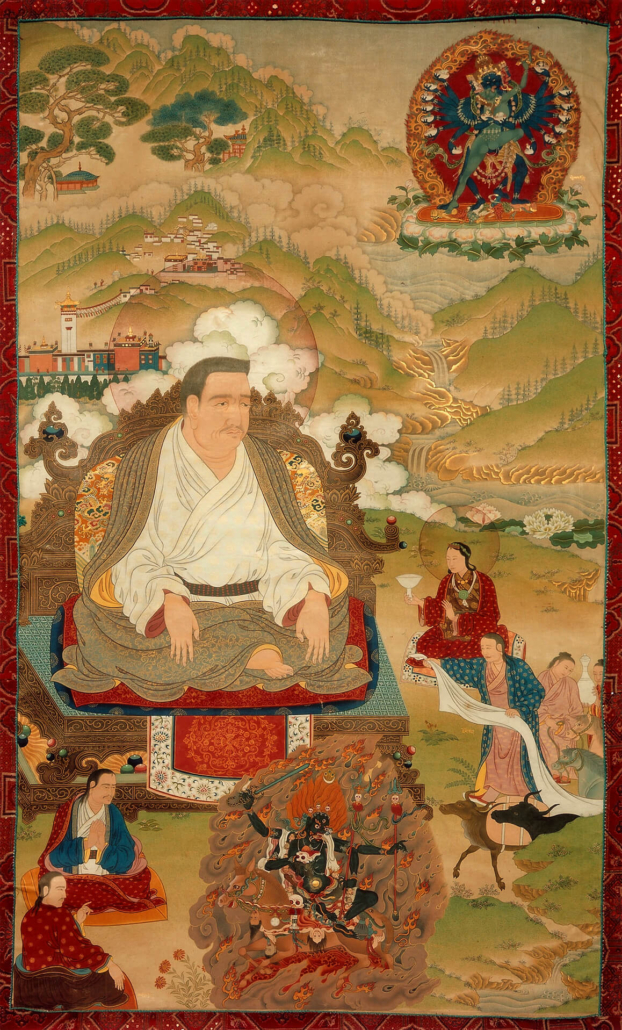
Vision et mission de la tradition de Marpa de Hevajra et Nairatmya
La pratique de Hevajra étant très élaborée, Sa Sainteté Drikung Kyabgon Thinle Lhundup a initialement choisi (en 2009, 2010 et 2016) d’accorder l’initiation et la transmission du mandala des quinze divinités Nairatmya à ses disciples du monde occidental.
En août 2018, le premier Drupchen de Hevajra a eu lieu au Milarepa Retreat Zentrum, au cours duquel l’initiation du mandala des neuf divinités de Hevajra a été donnée, suivie d’une pratique collective de sept jours (drupchen). En mai 2019, le premier drubchen de Nairatmya de sept jours a eu lieu.
Sa Sainteté Drikung Kyabgon Thinle Lhundup a de nouveau dirigé un drupchen de Hevajra et de Nairatmya en respectivement 2023 et 2024, transmettant à chaque fois l’initiation pour ces mandalas. Depuis 2025, le drupchen a lieu chaque année au Milarepa Retreat Zentrum pendant la longue retraite de Sa Sainteté.
Enseignements sur le tantra racine et exégétique de Hevajra
La tradition de Hevajra de Marpa est bien connue pour ses commentaires sur le Hevajratantra et le Vajrapanjaratantra, composés par Marpa et son disciple Ngok Zhedang Dorjé, et pour la puissance de leurs instructions clés provenant de Naropa et Maitripa.
Jusqu’à récemment, ces commentaires étaient rarement enseignés, et plusieurs d’entre eux avaient de fait disparu pendant des siècles. Au XXe siècle et au début du XXIe siècle, de nombreux manuscrits anciens ont été retrouvés dans les archives et bibliothèques de Lhassa. Au cours des dernières décennies, ces textes ont été réédités, en grande partie grâce aux efforts de Sa Sainteté Drikung Kyabgon Thinle Lhundup.
Bien que certaines lignées de transmission de l’explication de ces commentaires ait été interrompue au sein de l’école Kagyü, Sa Sainteté a déployé de grands efforts pour recevoir les explications (tri) et lectures rituelles (lung) de maîtres Sakya et Kagyü, au premier rang desquels Khenpo Appey.
Dans le but de faire revivre la pratique de Hevajra et Nairatmya au sein de la lignée Drikung Kagyü, Sa Sainteté a composé un commentaire sur le Hevajratantra très proche du commentaire de Marpa lui-même et y a introduit des notes explicatives composées par Ngok Chodor. Il lui a donné le même titre que le commentaire de Marpa, le Bumchung Nyima, ou Soleil [illuminant] les Cent-Mille abrégés.
Il a commandité la traduction de ce texte, qui a été réalisée par Sonam Spitz entre 2019 et 2022. Sa Sainteté a enseigné ce commentaire au Milarepa Retreat Zentrum en septembre 2022, donnant à cette occasion la lecture rituelle du tantra racine complet et du commentaire.
Nous espérons qu’à l’avenir, il sera possible de traduire le commentaire de Marpa sur le Vajrapanjara et que Sa Sainteté pourra donner des enseignements à ce sujet.
De cette manière, la lignée explicative de la tradition Hevajra de Marpa sera ravivée. Une bonne connaissance de ces textes aidera les pratiquants de la lignée Kagyü à mieux comprendre la pratique du système Hevajra et à atteindre le fruit de leur pratique, comme nos ancêtres Kagyü.
La sadhana des neuf divinités de Hevajra
La tradition Hevajra de Marpa comporte deux mandalas principaux, le mandala des quinze divinités de Nairatmya et le mandala des neuf divinités de Hevajra. Les deux pratiques ont fait l’objet de textes de pratique (sadhanas) depuis le début de la tradition. Marpa a composé une célèbre sadhana de Hevajra, intitulée en abrégé Dojar (« Manuel de récitation doté de citations scripturales »), qui, avec ses commentaires, a constitué la base de la tradition. D’autres textes de pratique ont été composés par Ngok Zhedang Dorjé (1078-1154) et par plusieurs autres maîtres Kagyü au cours des siècles (voir la lignée pour plus de détails).
De 2006 à 2012, Sa Sainteté Drikung Kyabgon Thinle Lhundup a composé plusieurs textes liés à la pratique de Hevajra en union (Yabyum) sous forme masculine seule (Yabka). Afin de s’adapter à différents niveaux de capacité, il a rédigé deux courtes pratiques quotidiennes, une pratique quotidienne de longueur moyenne, une pratique longue pour les retraites individuelles et un texte très complet pour la pratique en groupe (droupchen). Ces textes s’appuient sur la Sādhana dotée de citations scripturales (Dojar) de Marpa, et ont été complétés par des extraits rédigés par Taranatha et Kongtrül Yonten Gyatso.
Cette sadhana de Hevajra a été révisée au fil des ans par plusieurs traducteurs. Elle a été initialement traduite par Carl Djung avec l’aide de Sonam Spitz et Michael Essex pour le Drupchen de Hevajra 2018 au Milarepa Retreat Zentrum. Elle a été révisée par Senge Drayang, Carl Djung, puis par Cécile Ducher entre 2020 et 2022, avec l’aide supplémentaire de Spencer Ames et Daniela König. Elle a été à nouveau révisée par le même groupe pour le Drupchen de 2023, avec l’ajout de parties versifiées par Drupon Rachel Dodds. Les dernières modifications ont été apportées par Cécile Ducher en 2024, lorsqu’un texte complet de la tradition Marngok a été découvert, et les différentes versions ont été finalisées en 2025 sous la direction de S.S. Drikung Kyabgon Thinle Lhundup et en collaboration avec Khenpo Choswang afin que les versions tibétaines et anglaises des différents textes soient identiques. Le rituel de torma a été modifié selon la pratique MarNgok et une nouvelle visualisation pour la récitation du mantra a été ajoutée. D’autres modifications ont permis de rapprocher le texte de la tradition Mar-Ngok originale et de la sadhana Nairatmya de la même tradition.
Remarque : il existe une autre transmission Hevajra au sein de la lignée Drikung Kagyu, composée par le 1er Chungtsang Rigdzin Chödrak, appelée Hevajra Coémergent. Contrairement à la sadhana des neuf divinités Mar-Ngok centrée sur Hevajra à 16 bras, elle concerne le Hevajra à deux bras.
La sadhana des quinze divinités de Nairatmya
En ce qui concerne la pratique de Nairatmya, comme Hevajra, elle s’appuie sur les deux tantras du cycle Hevajra, le Hevajratantra et le Vajrapanjara, avec un accent plus marqué sur ce dernier. Nairatmya était le yidam principal de Ngok Chödor (disciple de Marpa), et on dit qu’il eut une vision d’elle.
Comme le dit Marpa dans son commentaire intitulé L’arbre de vie de la tente de vajra des Ḍākinīs, « Selon les instructions des gourous de la lignée, ce Hevajratantra est le résumé de l’essence de tous les tantras, et les siddhis en sont particulièrement proches. De plus, cette sādhana de la divinité Nairātmyā en est encore plus proche, car on dit que les déesses apparaissent [vraiment]. »
La sādhana que nous utilisons a connu deux versions principales :
-
2006-2022 : une première sādhana de Nairātmyā a été composée par Sa Sainteté Drikung Kyabgon Thinle Lhundup – également connu sous le nom de Chetsang Rinpoché « Suivant le système de la pure tradition de Marpa, cet arrangement rituel a été compilé exactement selon le Rinchen Gyendra de Ngog Zhedang Dorje ». À cette époque, plusieurs manuscrits de la tradition Marngok venaient d’être publiés en tibétain.
La première traduction de la sādhana de Nairātmyā a été réalisée par Tara Chöying Lhamo en 2006. Elle a été publiée en allemand et en anglais à l’occasion de la première retraite de Nairātmyā à Munich (Allemagne) en janvier 2009. De 2009 à 2016, Daniela D. König a dialogué avec Sa Sainteté au sujet des corrections. Ainsi, en juin 2017, Sa Sainteté lui a demandé d’être la personne responsable de tout ce qui concerne la pratique de Nairātmyā en Europe et de devenir l’Umze pour le drubchen / la retraite. En 2018, la sādhana a été révisée par Tara Chöying Lhamo et Daniela D. König.
Pour les retraites de groupe d’une semaine nuit et jour, un texte de drupchen de Nairātmyā a été développé par Sa Sainteté en 2018-2019, sur la base de cette sādhana et du texte du drupchen de Hevajra. Les révisions ont été effectuées par Sonam Spitz, Daniela D. König et Carl Djung, et la traduction des nouvelles parties par Sonam Spitz, Dr Cécile Ducher et Carl Djung.
Pour le deuxième drupchen de Hevajra en 2022, des révisions ont été effectuées et ont conduit à d’autres révisions de la sādhana de Nairātmyā. Celles-ci ont été effectuées par Cécile Ducher avec le soutien des autres membres du comité Marngok (Carl Djung, Daniela D. König, Spencer Ames, Westin Harris). -
2023-2024 : À la fin de l’année 2023, Cécile Ducher a entrepris une nouvelle révision de la sādhana de Nairātmyā afin d’en obtenir une version qui corresponde d’avantage à la tradition de Marpa telle qu’elle est décrite dans des textes qui n’étaient pas disponibles en 2006.
Au cours des révisions, plusieurs questions se sont posées. Pour y répondre de manière indiscutable et établir clairement la tradition de Marpa, Sa Sainteté à compilé une nouvelle sādhana fondée sur celle composée par Ngok Zhedang Dorjé. Cela a conduit à des révisions à grande échelle du texte de 2022 et à l’établissement d’un texte de pratique entièrement nouveau. Ces changements ont également conduit à une révision majeure du texte du drubchen de Nairātmyā.
La nouvelle sādhana s’intitule Recitation Manual Following the Oral Tradition of the Clear Realization of the Female-Only Fifteen-Deity Nairātmyā According to the Ngok Tradition of the Hevajratantra. Elle s’appuie sur le texte composé par Ngok Zhedang Dorje, avec les ajouts qu’il a jugés nécessaires, et est compilée en s’appuyant sur le Dojar de Marpa.
Pour ceux qui souhaitent approfondir leurs connaissances, les textes suivants ont été utilisés pour établir cette version de la sādhana de Nairātmyā:
- La sādhana de Nairātmyā par Ngok Zhedang Dorje, “Yum bkaʼ bdag med lha mo bco lngaʼi mngon rtogs gsung rgyun ji lta ba bris pa.” rNgog lugs dgyes pa rdo rjeʼi chos skor, pp. 191–210.<7p>
- La sādhana de Hevajra conservée dans le même manuscrit et contenant la conclusion de la pratique.
D’autres textes ont été utilisés pour clarifier certains points, tels que le Marpa Dojar, une autre sādhana Nairātmyā ancienne écrite par un disciple de Ngok Zhedang Dorje appelé Jampal, ainsi que la sādhana de Nairātmyā de Jamgön Kongtrül Lodrö Thayé et son rituel d’initiation de Nairātmyā
Aucune modification de la sādhana de Nairātmyā par Ngok Zhedang Dorje n’a été réalisée pour « moderniser » le texte afin d’adhérer au plus près à la tradition de Marpa. Comme l’a exprimé Sa Sainteté, « pour la sādhana de Hevajra, nous suivons le Dojar de Marpa, et pour la sādhana de Nairātmyā, nous suivons Ngok Zhedang Dorje ». De cette manière, les deux pratiques étroitement liées sont très claires et ne laissent aucune place à des interprétations personnelles : elles reflètent la pratique Marngok de Hevajra et de Nairātmyā telle qu’elle a été transmise aux XIe et XIIe siècles par Marpa et ses disciples proches.
HISTOIRE
Marpa Lotsawa Chokyi Lodrö (1000-1081) est le fondateur de l’école Kagyü du bouddhisme tibétain et à ce titre, ses enseignements et ses transmissions tantriques se sont répandus dans la plupart des sous-lignées Kagyu. Bien que la plupart des lignées Kagyü existantes aujourd’hui proviennent de Marpa, Milarepa, Gampopa, ses disciples (notamment le premier Karmapa et Pamo Drupa) et les disciples de ce dernier (les quatre lignées primaires et les huit lignées secondaires Kagyü), l’héritage de Marpa lui-même est mieux représenté par ce qu’il a transmis à son disciple Ngok Chödor. Chödor était un pratiquant non monastique contemporain de Milarepa et il a continué à pratiquer principalement les principaux yidams de Marpa décrits dans le Hevajratantra, Hevajra et Nairātmyā.
Ces mandalas, qui font partie d’un groupe parfois appelé « les sept mandalas des Ngoks », ont continué à être transmis au sein de la lignée de la famille Ngok au fil des siècles, et se sont également répandus dans d’autres lignées, notamment la lignée Drikung au début du XVIe siècle. Au XIXe siècle, ils ont été compilés par Jamgön Kongtrül Lodrö Thayé (1813-1899) dans le Trésor des mantras Kagyü (Kagyü Ngakdzö) et ont été transmis dans ce contexte depuis cette date
Bien que la transmission de ce que l’on peut appeler les tantras Marngok soit ininterrompue, très peu de pratiquants s’y sont réellement engagés au XIXe siècle. Le souhait de Sa Sainteté Drikung Kyabgon Thinlé Lhundoup est donc de redonner une place centrale à la pratique de ces yidams étroitement associés à Marpa.
Il existe deux traditions principales associées à la pratique des yidams issus du cycle de Hevajra, Hevajra et Nairātmyā, à savoir la tradition Sakya et la tradition Marpa. Ce site web traite principalement de la seconde, également appelée tradition Kagyü, ou plus précisément ici, la tradition Mar-ngok.
Hevajra était la principale divinité de pratique de Marpa, et Nairatmya celle de son disciple Ngok Chödor. Les deux yidams ont continué à occuper une place centrale dans la famille Ngok jusqu’au milieu du XVe siècle, mais ont été moins mis en avant dans les autres lignées Kagyü, qui privilégiaient la pratique de Chakrasamvara et Vajravarahi.
S.S. Drikung Kyabgon Thinle Lhundup a composé des pratiques sur Hevajra (Yabka et Yabyum) et Nairatmya (Yumka) entre 2006 et 2011, en s’appuyant largement sur les textes écrits par Marpa. Il a ensuite révisé ces textes sur la base d’anciens manuscrits de la tradition Marngok qui ont refait surface au début du XXIe siècle au monastère de Drepung et dans d’autres endroits du Tibet central.
D’autres maîtres Kagyü ayant joué un rôle important dans la diffusion de ces pratiques étaient le troisième Karmapa Rangjung Dorjé (1284-1339), Gö Lotsawa Zhönnu Pal (1392-1481), le quatrième Shamar Chödrak Yeshé (1453-1524), Taranatha (1575-1634), le huitième Situpa (1700-1774), Jamgön Kongtrül Lodrö Thayé (1813-1899), et de grands maîtres Drikung tels que le 1er Chetsang (1590-1654) et le 1er Chungtsang (1595-1659), etc..
Bref aperçu :
La revitalisation des transmissions presque éteintes des pratiques de Hevajra et Nairatmya de la tradition de Marpa

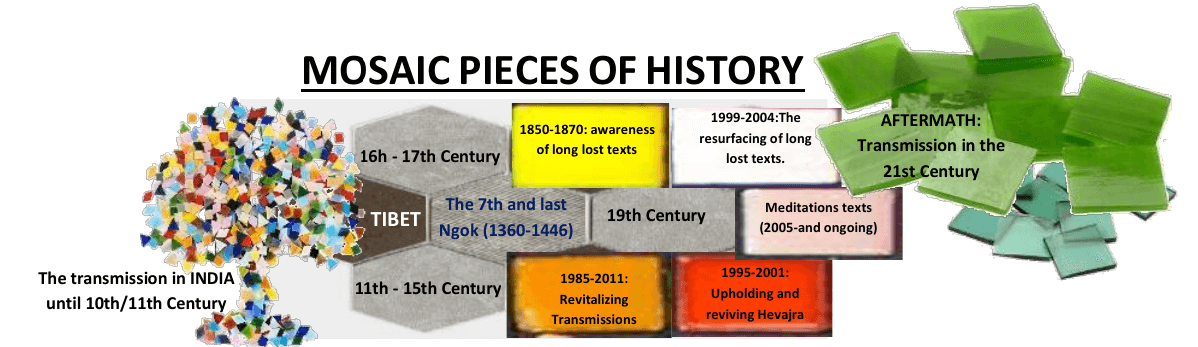
XIe-XVe siècles
Marpa Lotsawa (1000-1081) avait quatre disciples principaux. L’un d’eux, Milarepa, brillait comme le soleil sur l’Himalaya et bien au-delà. Il s’agissait de Milarepa (1028-1111), le fils spirituel qui transmit la majeure partie de ce qui est aujourd’hui reconnu comme la tradition Kagyu.
Un autre, Ngok Chödor (1023-1090), a également laissé un héritage durable. On disait de lui qu’il était « enclin à donner des explications harmonieuses et abondantes, comme les perles d’un collier ».
Ngok Chödor a poursuivi ce que Marpa souhaitait commencer, une lignée familiale. Marpa et Dagmema avaient un fils nommé Marpa Dodé, destiné à être le principal héritier de la lignée de Marpa, mais des obstacles l’en ont empêché. Plus tard, lorsque Ngok Chödor eut un fils, il le nomma Ngok Dodé (1078-1154), également connu sous son nom d’initiation, Ngok Zhedang Dorje.
Naropa dit à Marpa que ses disciples seraient particulièrement bénis pendant sept générations, ce qui est généralement considéré comme faisant référence aux descendants de Ngok Chödor. Le décompte des sept générations commença avec le fils de Chödor, Ngok Dodé, et se poursuivit avec les détenteurs ultérieurs du siège Ngok, appelé Treuzhing au Tibet central. Le septième des maîtres Ngok fut Ngok Jangchub Pal (1360-1446).
En général, les enseignements tantriques de Marpa sont divisés en deux courants, appelés « courant exégétique » ou « lignée exégétique » (bshad rgyun ou bshad brgyud) et « courant (ou lignée) de pratique » (sgrub brgyud). Le premier fait référence à la transmission reçue par Ngok Chödor. Malgré son nom, il est très axé sur la pratique tantrique, mais comporte également une importante composante d’exégèse tantrique, avec un nombre considérable d’enseignements formels sur la théorie, les détails rituels et la symbologie des tantras. La « lignée de pratique », celle transmise en particulier par Milarepa, ne s’intéressait pas tant aux commentaires des tantras qu’aux détails précis de la mise en pratique des instructions clés que Marpa avait rapportées d’Inde. Bien que les deux puissent sembler très différentes, en fait, tout l’enseignement de Marpa se définit par la puissance de ses instructions clés, et c’est donc cela qui a fini par incarner la lignée Kagyü en général.
La lignée de la famille Ngok est connue pour avoir principalement propagé la « lignée exégétique » provenant de Marpa. Elle détenait en particulier les « sept mandalas des Ngok », c’est-à-dire les sept mandalas centraux de Marpa et de la lignée Kagyü. Deux de ces divinités étaient Hevajra et Nairatmya. Elles sont au centre de la revitalisation actuelle menée par Sa Sainteté Drikung Kyabgon Thinle Lhundup.
La raison pour laquelle Sa Sainteté le Drikung Kyabgon s’intéresse à cette lignée remonte au XVe et au début du XVIe siècle. Le dernier maître Ngok important, Ngok Jangchub Pal, a transmis le cycle Hevajra à de nombreux détenteurs de la lignée, parmi lesquels Gö Lotsawa Zhonnu Pal et Lochen Sönam Gyatso, qui l’ont ensuite transmis au 4e Shamar. Le 4e Shamar était un maître Karma Kagyü très puissant de la fin du XVe siècle. Il a composé de nombreux textes sur le cycle Hevajra et a également continué à diffuser la pratique Hevajra. C’est notamment l’un de ses disciples, l’abbé de son monastère de Yangpachen, qui a transmis Hevajra à Drikung Rinchen Püntsok, et la pratique s’est ensuite poursuivie au sein de la lignée Drikung.
XVIe et XVIIe siècles
Au début du XVIIe siècle, le Tibet central était en proie à de nombreuses tensions politiques. Deux partis puissants s’opposaient afin de s’emparer du pouvoir au Tibet. L’un, soutenu par les troupes mongoles, était dirigé par un groupe de personnes issues de la tradition Gelukpa et mené par le 5e Dalaï-Lama. L’autre, dirigé par le puissant roi de Tsang, Tseten Dorjé, était davantage lié à l’ordre Karma Kagyü.
En 1642, le Dalaï-Lama et Gushri Khan vainquirent leur adversaire et le régime du Ganden Podrang fut établi au Tibet. Au cours de ce processus, de nombreux monastères et bibliothèques furent saisis, et de nombreux textes provenant de différentes lignées furent confisqués et mis sous scellés. Un maître bouddhiste estima au milieu des années 1980 « qu’un quart des bénédictions du Bouddha au Tibet avait été perdu à cette époque. » D’innombrables volumes de textes provenant de diverses lignées du bouddhisme tibétain ont été cachés dans une bibliothèque du monastère de Drepung, entassés dans des arrière-salles, et oubliés pendant des siècles. Ironiquement, cette dissimulation de dizaines de milliers de volumes a permis leur préservation pendant les destructions qui ont eu lieu au Tibet au XVIIIe siècle ou pendant la Révolution culturelle des années 1960.
La bibliothèque du monastère de Drepung a été ouverte dans les années 1990 et depuis lors, un flux constant de volumes jusque-là perdus a refait surface.
XIXe siècle
Comme le samaya est l’élément vital de la pratique, les lignées de transmission sont les veines à travers lesquelles cet élément vital circule jusqu’à nos jours. Pour que cela se produise, les veines de la lignée doivent être intactes. Au fil du temps, de nombreuses lignées ont perdu leur force vitale, en partie parce que trop peu d’êtres ont atteint la réalisation grâce à la pratique d’une méditation spécifique, et en partie à cause de la rupture de la continuité du samaya. Certaines méditations spécifiques subsistent encore sous forme de textes sans lignée, mais à bien des égards, ces textes sont inutiles car il n’y a plus de maîtres vivants pour transmettre la lignée ininterrompue de bénédictions et d’explications.
Jamgön Kongtrul Lodrö Thayé (1813-1899) souhaitait s’assurer que le plus grand nombre possible de ces lignées et transmissions de méditations spécifiques, encore vivantes, subsistent pendant des siècles. Lui et un groupe de maîtres extraordinaires ont travaillé dans ce but. Lodrö Thayé a rassemblé et compilé ses Cinq Trésors (mdzod lnga), dont l’un est le Kagyu Ngakdzö (« Le Trésor des mantras Kagyu ») et un autre, le Damngak Dzö (« Le Trésor des précieuses instructions », transmis par Sa Sainteté le Drikung Kyabgön en 2024). C’est dans le Kagyü Ngakdzö que la plupart des transmissions de Marpa sont conservées.
Lodrö Thaye avait reçu les Sept Mandalas des Ngoks du 6e Tralep Tulku, Yeshé Nyima, et détenait ainsi le cœur battant des tantras Kagyu chéris par Marpa Lotsawa. Il a inclu dans le Kagyü Ngakdzö la transmission de 13 tantras du yoga insurpassable, avec 25 initiations et autorisations de pratiques pour tous les tantras provenant de Marpa, ainsi que quelques autres. La collection remplit six volumes et comprend de nombreux manuels de pratique sur ces tantras.
Textes perdus depuis longtemps (1850-1870)
Lorsque Lodrö Thayé rassembla ce qui restait des transmissions vivantes kagyü du mandala des neuf divinités de Hevajra, il compila une courte sadhana intitulée « Drenpa Chikpa » (dran pa gcig pa). Il y écrit :
« Après m’être prosterné [devant Hevajra], je vais expliquer les mots de la pratique quotidienne. Pour ceux d’entre vous qui le souhaitent, voici la pratique quotidienne du yogi du glorieux Hevajra. Pour ceux qui ne sont pas capables de se purifier en utilisant quotidiennement la pratique extensive, la méthode est la suivante : Les trois étapes 1) Génération [de la divinité], 2) Récitation [du mantra] et 3) Achèvement [de la dissolution] dissipent l’attachement aux trois aspects du corps, de la parole et de l’esprit. […]
« Comme je crains que mon esprit soit un réceptacle trop petit [pour contenir cette méditation], il vaut mieux que ce courant unique [de transmission] se répande dans l’espace. […] C’est grâce au mérite de Chogtrul Rinpoché [Karma Ratna] que ce chef-d’œuvre extraordinaire de la lignée de pratique a été achevé. Cet ouvrage a été compilé à partir de la sadhana intitulée Les quatre aspects du Vajra par le grand Ngoktön Zhedang Dorjé et en prenant les paroles du 4e Shamarpa comme référence. [Ces paroles] n’ont pas été modifiées par mes propres inventions. Ce texte a été composé au centre de retraite de Palpung » [c’est-à-dire Tsadra Rinchen Drak].
D’après les lectures et les études de Sa Sainteté le 37e Drikung Kyabgön, Lodrö Thayé a également écrit dans le Damngak Dzö qu’« une grande partie des textes » étaient cachés dans la bibliothèque du monastère de Drepung, et que cette collection contiendrait d’autres commentaires importants sur la pratique extensive de Hevajra.
Préserver et faire revivre Hevajra (1995-2001)
Pour qu’une transmission de Hevajra, ou toute autre transmission, soit complète, trois éléments sont nécessaires :
- L’initiation [WANG] au tantra lui-même. Celle-ci est conservée dans le Kagyü Ngakdzö.
- Les instructions [TRI] pour comprendre le tantra en étudiant les commentaires sur le tantra rédigés par les maîtres passés de la lignée (la « lignée exégétique ») ainsi que les instructions clés sur la pratique telles qu’elles ont été transmises de génération en génération et telles qu’elles sont encore pratiquées aujourd’hui (la « lignée de pratique »).
- La lecture rituelle [LUNG] de tout cela, qu’il s’agisse de textes de pratique, de commentaires ou d’instructions clés.
Grâce aux efforts de Lodrö Thayé et de la lignée de maîtres qui l’ont précédé et suivi, les initiations de Hevajra sont encore disponibles aujourd’hui, ainsi que de nombreuses instructions et lectures rituelles.
En ce qui concerne les instructions, elles sont devenues très rares dans la lignée Kagyü au fil des siècles. Une partie importante de la renaissance des pratiques de Hevajra de Marpa au XXe siècle a donc été possible grâce au fait que Sa Sainteté le Drikung Kyabgön a reçu des instructions au sein de la lignée Sakya, en particulier de Dezhung Rinpoché (1906-1987) et Khenpo Appey (1927-2010), qui s’étaient eux-mêmes efforcés de revitaliser les transmissions de Hevajra au sein de la lignée Sakya. Lors de l’inauguration de l’Académie bouddhiste internationale (IBA) à Katmandou en 2001, Khenpo Appey Rinpoché a donné des enseignements sur Hevajra. Parmi les nombreux maîtres éminents présents se trouvait Sa Sainteté Drikung Kyabgon Thinlé Lhundoup, qui a reçu la transmission du Hevajratantra et de ses commentaires.
La réapparition de textes perdus depuis longtemps (1999-2004)
Quelque temps après avoir effectué une retraite de trois ans (1979-1982) axée principalement sur Chakrasamvara, Sa Sainteté décida de revitaliser la tradition de Marpa, en particulier celle de Hevajra. Dans les années 1990, Sa Sainteté reçut d’un homme originaire du Tibet oriental, qui avait longtemps travaillé dans les archives du Potala, un commentaire jusqu’alors inconnu de Marpa sur le Hevajratantra. Cet homme avait immédiatement reconnu l’importance de cet ouvrage et en avait fait une copie manuscrite.
Quelques années plus tard, d’innombrables volumes de textes provenant de diverses lignées du bouddhisme tibétain, qui avaient été entreposés dans les coffres du Nechu Lhakang au sein du monastère de Drepung, ont commencé à être révélés. Vers 1999, un catalogue du contenu des bibliothèques du monastère de Drepung a été établi. Certains estiment qu’il y avait environ 30 000 volumes. Parmi eux se trouvaient environ 40 boîtes (ou volumes) de textes Drikung. Gochog Rinpoché a transmis cette information à S.S. Drikung Kyabgon Thinle Lhundup et lui a décrit l’emplacement précis des textes.
Peu après, à la demande de Sa Sainteté, un homme nommé Mulam fut engagé pour copier à la main un commentaire sur le Hevajratantra de Gyalwa Kunga Rinchen (1475-1527) et le remettre à S.S. Drikung Kyabgon Thinle Lhundup. Plus tard, au début des années 2000, S.S. Drikung Kyabgon Thinle Lhundup demanda à Nubpa Rinpoché tous les autres textes. Grâce à de nombreuses aspirations décisives et à des efforts inlassables pendant plusieurs années, Nubpa Rinpoché et environ six autres personnes ont photocopié les textes par petites portions.
Plus tard, Dr Klaus-Dieter Mathes (alors lié à l’université de Hambourg) et d’autres personnes ont rassemblé les nombreuses photocopies individuelles sur des microfilms. Ce travail a été achevé vers 2004. L’un de ces microfilms originaux contenant tous les volumes collectés se trouve aujourd’hui à l’université de Berlin.
En 2004, S.S. Drikung Kyabgon Thinle Lhundup a découvert qu’un lama Kagyu (peut-être Karma Kagyu de Lhassa) avait également publié plusieurs volumes sur les ancêtres de l’école Kagyü, qu’il s’agisse des maîtres indiens ou de Marpa, dans le ’Bri gung bka’ brgyud chos mdzod chen mo (151 vol.). L’origine de cette collection n’est pas claire. Une grande partie semble provenir de Drepung, d’autres du Potala, et d’autres encore de lieux inconnus. Ces textes contiendraient des notes personnelles de Marpa et de ses disciples.
S.S. Drikung Kyabgon Thinle Lhundup a utilisé toutes ces sources pour compiler une collection en trois volumes des textes de Marpa, totalisant environ 1 900 pages, y compris un commentaire spécial sur Hevajra. Tous ces textes ont été publiés par la bibliothèque Songtsen.
Parallèlement, le Centre de préservation de Paltsek a publié des reproductions des manuscrits ainsi que des copies informatisées des textes trouvés à Drepung. Un catalogue en deux volumes des fonds des bibliothèques du monastère de Drepung a été publié en 2004. Une collection en dix volumes des manuscrits Ngok a été publiée en 2007, puis enrichie en 2011 d’une collection de 34 volumes contenant ces manuscrits ainsi que de nombreux autres textes composés par Marpa et les maîtres Ngok, dont beaucoup ont d’abord été conservés dans la grande collection Drikung et dans les trois volumes du Sungbum de Marpa compilés par Sa Sainteté.
Au fil des ans, le comité Mar-ngok a commencé à travailler sur ces textes et vise à continuer à étudier et à traduire bon nombre d’entre eux afin de répondre au souhait de Sa Sainteté de « redonner à Marpa sa place d’honneur ».
Textes de méditation (2005 - et en cours)
De nombreux textes conservés dans cette collection contiennent des manuels de pratique sur les mandalas des quinze divinités de Hevajra et des quinze divinités de Nairatmya qui ont servi de base pour rétablir les textes de pratique dans la tradition de Marpa. Entre 2007 et 2009, Sa Sainteté a compilé des sadhana sur le mandala des quinze divinités de Nairatmya, et entre 2005 et 2012, il a compilé des sadhana sur le mandala des neuf divinités de Hevajra. Les textes sur Hevajra ont été compilés en un seul volume comprenant huit titres et un total de 521 pages. Sa Sainteté Drikung Kyabgon Thinle Lhundup a reçu la lecture rituelle (lung) de ces textes d’un maître Karma Kagyu nommé Sherab Gyaltsen Rinpoché, qui l’avait lui-même reçue de Dilgo Khyentse Rinpoché.
Revitalisation de la transmission explicative et de la transmission de l’initiation de la sadhana
En 2004, S.S. Drikung Kyabgon Thinle Lhundup a effectué une retraite de six mois sur Hevajra dans le lieu sacré de Lapchi (Népal). En 2006, il a donné des enseignements sur le Hevajratantra à environ 40 khenpos, rinpochés, tulkus et drubpöns à Jangchubling, le principal siège monastique de la lignée Drikung Kagyu en exil à Dehra Dun, en Inde.
Cette année-là, deux rinpochés ont effectué une retraite de six mois sur la pratique des neuf divinités de Hevajra de la tradition Marpa. En 2007, il a fait de courtes retraites sur les quinze divinités de Nairatmya et en 2009 et 2010, il a transmis l’initiation de Nairatmya en Allemagne et aux États-Unis. C’est ainsi qu’un cycle revitalisé d’enseignements et de pratiques de Hevajra et Nairatmya a été lancé.
Sa Sainteté a ainsi rétabli les pratiques de Hevajra et Nairatmya en tant que pratiques de Kyerim au sein de l’école Kagyu, ainsi que le rôle de la tradition Marngok au sein de celle-ci. Le 26 février 2018, S.S. Drikung Kyabgon Thinle Lhundup a annoncé :
La tradition Naropa de Hevajra était le principal Yidam de Marpa Lotsawa et la principale lignée de pratique Marpa Kagyu. Sa Sainteté souhaite faire revivre l’importante lignée de Marpa, car elle est menacée et au bord de l’extinction. Afin de mettre en œuvre cet enseignement important, nous avons créé un site web Mar-Ngok. Ce site web a été autorisé par Carl Djung et Jette Aarestrup Mortensen. Pour plus de détails : http://www.mar-ngok.org
Ce qui suit est tiré de la biographie de S.S. Drikung Kyabgon Thinle Lhundup,From the Heart of Tibet (Shambhala, 2011), pages 279-280:
La pratique tantrique comprend deux étapes, la phase de création et la phase de perfection. La phase de création (kyerim) comprend des visualisations et des récitations, tandis que la phase de perfection (dzogrim) englobe la pratique sur les énergies subtiles et la voie du Mahamudra. Aujourd’hui, les Kagyupa s’appuient principalement sur le Tantra de Chakrasamvara pour la phase de génération et sur les Six Yogas de Naropa pour la phase de perfection, bien que le kyerim soit à l’origine basé sur le Hevajratantra. On peut bien sûr utiliser n’importe quel tantra du yoga insurpassable, mais si l’on tient compte de la force de l’histoire, la transmission a pris naissance avec Marpa et il a enseigné le Hevajratantra pour la phase de création. Rinpoché s’est donc donné pour mission de faire revivre cette tradition originale et de la rétablir dans tous les monastères Drikung. Au cours de ses études, il a découvert d’autres commentaires remarquables qu’il examine et révise actuellement. Il a reçu un texte jusqu’alors inconnu de Marpa sur le Tantra de Hevajra d’un homme originaire de l’est du Tibet qui avait longtemps travaillé dans les archives du Potala, où de nombreux ouvrages étaient simplement entassés pêle-mêle, mais au moins préservés. Il a découvert parmi eux l’œuvre inconnue de Marpa et en a immédiatement reconnu l’importance, mais comme il ne pouvait rien sortir du Potala, il a soigneusement copié le texte et ajouté sa copie à une collection de textes Taklung Kagyu. Rinpoché avait accès à cette collection, et donc à la copie du texte de Marpa, car il soutient activement la lignée Taklung Kagyu, actuellement affaiblie, et supervise personnellement l’éducation du jeune Taklung Shabdrung à Dehra Dun. Il a minutieusement révisé cet ouvrage jusqu’alors inconnu contenant les enseignements uniques de Marpa et l’a publié dans une édition spéciale comprenant le texte original, le commentaire de Marpa et les propres notes de Rinpoché, avec ses explications des concepts que Marpa a laissés inexpliqués ou qui sont difficiles à interpréter. En outre, les œuvres complètes de Marpa sont en cours d’édition par quatre moines de la bibliothèque Songtsen. Grâce aux efforts de S.S. Drikung Kyabgon Thinle Lhundup, Marpa retrouve la place d’honneur qui lui revient dans la lignée.
Les textes mentionnés ici sont aujourd’hui facilement accessibles :
- Le commentaire de Marpa sur le Hevajratantra, le Soleil [illuminant] les Cent Mille abrégés (Bumchung Nyima), a été traduit par Sonam Spitz et enseigné par Sa Sainteté en 2021 au Milarepa Retreat Zentrum.
- L’édition en trois volumes des Œuvres complètes de Marpa a d’abord été publiée par la bibliothèque Songtsen, puis rééditée à plusieurs reprises par la bibliothèque Songtsen et d’autres institutions. Voir par exemple cette édition de Lhassa publiée en 2009. edition from Lhasa published in 2009.
Depuis février 2016, lorsque Sa Sainteté a donné l’initiation de Hevajra à Jangchubling, Dehra Dun, une activité mondiale concernant la tradition de Marpa du cycle de Hevajra se déroule dans le monde entier.
La Milarepa Retreat Zentrum, siège principal de la lignée Drikung en Europe, accueille chaque année des drubchens de Hevajra et Nairatmya issus de la tradition Marngok. Le premier drupchen de Hevajra a eu lieu en 2018, et le premier drupchen de Nairatmya en 2019. Après une pause pendant la pandémie, un deuxième drupchen de Hevajra a été organisé en 2023, et un drupchen de Nairatmya en 2024. Au cours de tous ces événements, S.S. Drikung Kyabgon Thinle Lhundup a donné les initiations de ces divinités et a assisté à la plupart des sessions. À partir de 2025, le Milerepa Zentrum continuera à organiser en alternance un drupchen de Hevajra et Nairatmya.
Ce qui précède a été compilé par Carl Djung, entre janvier et juin 2017. Jeffrey Rosenfeld a peaufiné le langage en juin 2017. Il a été révisé par Cécile Ducher en décembre 2024.
Lineage Tree
Vajradhara
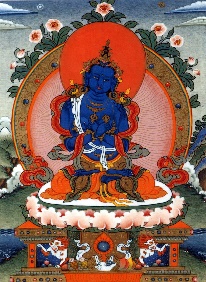
No. 1
Vajradhara
དམིགས་མྱེད་སིང་རྱེའི་རང་གཟུགས་རྡོ་རྱེ་འཆང་།
ཁྱབ་བདག་རྡོ་རྱེ་འཆང་ཆྱེན་པྡོའི་ཞལ་དུミ
Dorje Chang, the embodiment of the inconceivable compassion [a compassion, which arises for all beings still bound by worldly concerns and obstacles.]
Jñānaḍākinī
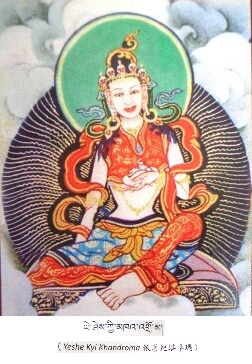 No. 2
No. 2
Jñānaḍākinī
གསང་སྔགས་མཛོད་འཆང་ཡེ་ཤེས་མཁའ་འགྲོ་མ། །
Secret Mantra holder Jñānaḍākinī
The Ḍākinī endowed with Human Bone Ornaments from Uddiyana held the Hevajra Tummo lineage, transmitting the mother lineage, passing it down to the Kagyu lineage. Of the four streams (bka’ babs bzhi), the fourth was transmitted from Dakini Kalpabhadrī (mKha gro bsKal pa bzang mo) and includes the Hevajratantra and the practice of Tummo.
Vajragarbha
 No. 3
No. 3
Vajragarbha
རྒྱལ་བའི་སྲས་པོ་རྡོ་རྗེ་སྙིང་པོའི་ཞབས། །
Vajragarbha, son of the Victorious.
On the Sambhogakaya level, the Hevajratantra was given by the Bhagavan to the ‘Son of the Victorious’ Vajragarbha. On the Nirmanakaya level, the Mahasiddha Vajragarbha, with several texts in the Tibetan Kangyur, was a holder of the Hevajra lineage.
Vajragarbha (Tib.: Dorjé Nyingpo) was a bodhisattva who compiled the Dzogchen teachings given by the Buddha Samantabhadra in Akanishtha. He is counted as one of Tertön Sogyal’s previous incarnations. The main interlocutor of the Buddha’s entourage in many Yoginītantras is also called Vajragarbha.
Saraha
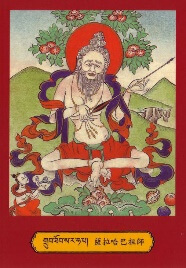 No. 4
No. 4
Saraha
འཕགས་ཡུལ་གྲུབ་པའི་སྤྱི་མེས་ས་ར་ཧ། །
Siddha Saraha, Noble Land’s forefather
Saraha, the son of a Dakini, was born in the east of India in Roli. He observed the laws of the Brahmins by day, and received instruction in the tantric mysteries from Buddhist masters by night. Saraha then took a 15-year-old girl as his consort and moved to a distant land, where he practiced his sadhana in isolation. The teaching she gave was vital to Saraha: “The purest solitude is one that allows you to escape from the preconceptions and prejudices, from the labels and concepts of a narrow, inflexible mind.” He listened carefully and began to devote himself to ridding his mind of conceptual thoughts and belief in the substantiality of objective reality. In time, he attained the supreme realization of Mahamudra and spent the remainder of his life in service to others. Upon death, Saraha and his consort ascended to the bliss of the Paradise of the Dakinis.
Nāgārjuna
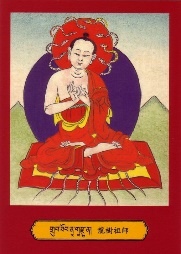 No. 5
No. 5
Nāgārjuna
མདོ་སྔགས་རྒྱུད་སྡེའི་གཏེར་འབྱུང་ཀླུ་གྲུབ་ཞབས།
Nāgārjuna, Source of the Treasure of Sutras and Tantras.
For the transmission of the practice of Hevajra, there is ‘the sadhana/empowerment transmission’ and teachings on the Hevajratantra. This tantra is traditionally said to have been given to Nāgārjuna in the 2nd century in a secret cave by Vajraḍākinī in Oḍḍiyāna and thus brought to the human realm to spread in what we today know as India.
Here Nāgārjuna is invoked for his transferring of the sadhana/empowerment transmission.
Some say that there are two Nāgārjunas, related to the sutra tradition and the tantra tradition. Others says Nagarjuna lived 600 to 800 years. Some sources say he was born in 482 AD, other in 212 AD. According to Mahāyāna scriptures, Nāgārjuna was born 1200 years after the Buddha’s parinirvana (483/400 BC +1200, which makes it around 717-800 AD).
Āryadeva
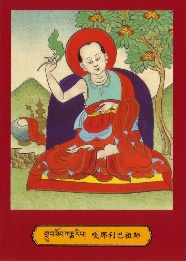 No. 6
No. 6
Āryadeva
རིག་པའི་འབྱུང་གནས་ཨཱརྻ་དེ་བ་དང་། །
Āryadeva, The source of Awareness
Āryadeva (3rd century CE) was a disciple of Nāgārjuna and author of several important Mahāyāna Madhyamaka Buddhist texts. He is also known as Kanadeva, the 15th patriarch in Chan Buddhism, and as “Bodhisattva Deva” in Sri Lanka. One source sets both the same as above: “Also known as Kanadeva. A scholar of the Madhyamika school in southern India during the third century and the successor of Nāgārjuna.” The same source also places him even earlier: “(2nd century): One of the ‘seventeen great panditas’ of ancient India and foremost disciple of Nāgārjuna.”
Chandrakīrti
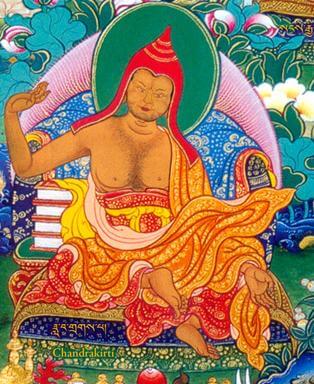 No. 7
No. 7
Chandrakīrti
ཟླ་བ་གྲགས་པའི་ཞབས་ལ་གསོལ་བ་འདེབས། །
Chandrakīrti: at your feet we pray!
The sources about the successors of Nagarjuna give different place and time in history for Chandrakīrti. One source places him in the 6th, maybe 7th century. Some say that Chandrakīrti’s efforts of purification and reform of the Buddhist sangha helped to open the way for the attempts of Harsha (606-647) to become, as it were, a second Ashoka enforcing Buddhist dharma by law. Some place him in the Gupta era (320-c.535).
Chandrakīrti is the next great exponent of the Madhyamaka system. He became an abbot of Nalanda. Chandrakirti was succeeded by Dharmapala (a.d. 635), and then for a short time by Jayadeva. Jayadeva’s disciple was Shantideva, the most famous writer on Madhamika system after Chandrakirti.
Mātaṅgī
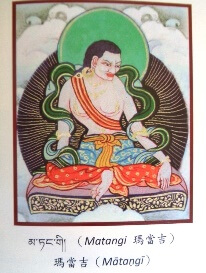 No. 8
No. 8
Mātaṅgī
རྣལ་འབྱོར་དབང་ཕྱུག་མ་ཏངྒི་པ་དང་། །
Mātaṅgī, powerful lord of yogis
Was Mātaṅgī a male yogi or a female yogini? It seems not to be clear. Some refer to her as the Dakini called Matongha. In any case, the lineage prayer indicates that the both the Hevajra sadhana and empowerment rituals were passed on through Mātaṅgī to Tilopa.
Mātaṅgī is considered to be among the seven spiritual heirs of Nagarjuna. This list counts 1) Sakyamitra 2) Nagabodhi 3) Aryadeva 4) Matangi (ma tang ki). 5) Buddhapalita 6) Bhavaviveka and 7) Ashvagosha.
According to Padma Karpo’s biography, Tilopa met Nagarjuna’s female disciple, Matangi, when he sought to find Nagarjuna again and discovered that Nagarjuna had already passed away.
Also it is stated: “Tilopa received Guhyasamaja teachings on illusory body from Matangi, Mahamudra and Chakrasamvara teachings on Clear Light from Lalapa, Hevajra teachings on Tummo from Dakini Samantabhadri, and Chakrasamvara teachings from Nagpopa before being instructed by Matangi to work as a sesame oil maker and as a servant to a prostitute named Dharima.”
Some biographies state: “Sri Matangi passed on to Tilopa the teachings on resurrection of the dead body (according to other sources it was the Dakini Matongha). It was Matangi, who advised Tilopa to start to work at a brothel in Bengal for a prostitute called Dharima as her solicitor and bouncer.” “At night he assisted the prostitute by escorting men in and out; during the day he did the work of beating and grinding sesame seeds for his living.”
Another source describes: “Tilopa perfectly understood and fully mastered the common and supreme points of all instructions he had received, but Guru Matangi (according to Thrangu Rinpoche, the dakini called Kalpa Zangmo) did not allow him to enter into the action. When he showed the miracle of transferring the consciousness of a fish into space, his preceptor knew that he had attained the siddhis and let him go wherever he wanted so that he could benefit many living beings.”
Tilopa
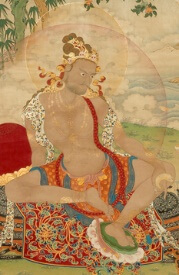 No. 9
No. 9
Tilopa, (988-1069)
རྡོ་རྗེ་འཆང་དངོས་ཏཻ་ལོ་ཤེས་རབ་བཟང་། །
Tilo Sherab Zangpo, Vajradhara himself
Continuing his journey in India, Tilopa received the Hevajratantra and dream yoga from Shri Rolpe Dorje, the disciple of Shri Lawapa. In this way, Tilopa was holder of the teachings on the highest yoga tantras’ phases of creation and perfection, which descended from the four lineages of instructions (bka’ babs bzhi). Considering the transmissions as four enables one to perceive of Tilopa at the centre of the maṇḍala, thus indicating that the transmission is complete, and that the guru is omniscience.
Tilopa was also holder of the actual transmission of ultimate reality, the “lineage of realization and blessing” (rtogs pa byin brlabs kyi brgyud pa), also called the “proximate lineage” (nye brgyud), referring to the fact that Tilopa received his transmission straight from the enlightened mind.
Nāropa
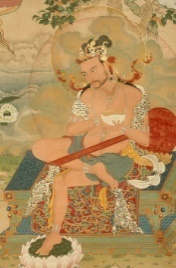 No. 10
Nāropa (956-1040)
ཀྱེ་ཡི་རྡོ་རྗེའི་རྣམ་རོལ་ནཱ་རོ་དང་། །
Nāro, Hevajra’s magical display
Holder of the “four lines of transmission”, which in fact can be counted as six, sometimes seven, or more.
We know many names of Indian mahasiddhas from the tantric era, which lasted from the sixth to the twelfth century. Some of them seem to be just legendary people, and some are surely historical. Naropa is definitely an historical person. A traveler named Nagtso Lotsawa who visited India in 1040, probably shortly before Naropa’s death, described him in the journal of his travels. He wrote that Naropa was extremely famous and respected. Even local kings considered it a big blessing to see him and to have him put his foot on their heads. He was “quite corpulent, with his white hair [stained with henna] bright red, and a vermilion turban bound on. He was being carried [on a palanquin] by four men and chewing betel-leaf…”
It was during Marpas final trip to India that Naropa, as a test of his student, manifested the Hevajra mandala, asking Marpa to whom he would bow first: to the vision of Hevajra, or to himself, Naropa, its creator. Overwhelmed by the grandeur of the Hevajra deity and retinue, Marpa made the mistake of bowing to the emanated mandala first. Naropa immediately corrected him, saying in effect that the guru always takes precedence because it is he who makes the deities real for us. But the damage was done, and Naropa warned Marpa that this was an omen that his biological descendants would die out, but that his spiritual lineage would continue as long as the Buddha’s teachings continued. Naropa named him as his regent. In such ways, Naropa guided Marpa both with regards to Yidam, as well as Protector.
Marpa
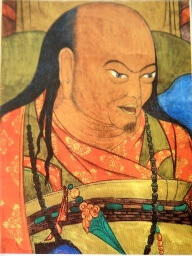 No. 11
Marpa, (1000-1086)
མར་པ་ལོ་ཙཱའི་ཞབས་ལ་གསོལ་བ་འདེབས། །
སྒྲ་སྒྱུར་མར་པ་ལྡོ་ཙཱའིミ
Marpa the Translator, at your feet we pray
Marpa was born in the navel of the Tibetan land of snow, in the higher Lhodrag, in the snowy valley of Pesar.
Marpa’s lifestory is vast and deep. This little anecdote shows a little about Marpas connection to Naropa and Hevajra. When Marpa travelled to Nepal, he met Nyo Lotsawa, which would prove, in different ways, to be a catalyst to Marpa’s growth. Together, they encountered two disciples of Mahapandita Naropa, and just through hearing the latter’s name, Marpa felt an awakening Dharma connection. Marpa traveled on to Pullahari monastery to meet his predestined teacher. Naropa gave Marpa the empowerment for the Hevajra tantra. Meeting up with Nyo a year later, Nyo realized that Marpa’s understanding of the Hevajra surpassed his own.
In a song to Milarepa, with Dagmema at his side, the Lama sang:
“May all of those who take this as their central pillar.
May this person be blessed and enjoy the good that comes of the Kagyu lineage gurus.
May this person be blessed and enjoy the good of yidams in all their excellence.
May this person be blessed and enjoy the goodness of the lord Hevajra’s presence.
May this person be blessed and enjoy the good of Chakrasamvara’s and Guhyasamaja’s presence.
May this person be blessed and enjoy the good of excellent dharmapalas.
May this person be blessed and enjoy the good that comes about by Dakini Düsolma, the goddess.”
As one scholar describes the great translator: “Marpa was an undisciplined young man who first spent some time in Nepal before making extended travels to the jungles and forests of India in order to receive the most sophisticated spiritual technologies of the time, the highest yoga tantras (niruttaratantras). Unlike many of his colleagues, Marpa just passed through the illustrious Buddhist universities and headed for the yogis, foremost among them Nāropa and Maitripa. After some twenty years learning and training in India, accumulating gold and offering it to his masters, Marpa came back to Tibet in the mid-11th century and settled in Lhodrag. His fame soon spread, and disciples gathered. Marpa held several tantric cycles such as Hevajra, Catuṣpīṭha, and Mahāmāyā. Marpa was specialized in tantric exegesis, particularly distinguished through the key instructions (gdams ngag) given by Nāropa, and was known as an expert in these techniques.”
Ngok Chödor
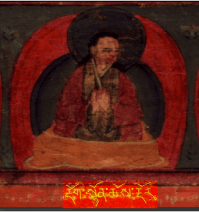 No. 12
Ngok Chödor (1023-1090)
རྒྱུད་སྡེ་རྒྱ་མཚོའི་མངའ་བདག་རྔོག་སྟོན་རྗེ། །
Ngokton Chödor, owner of the ocean of tantras
Marpa had Twelve Great Disciples, enumerated as the four “dharma sons” (chos kyi sras), the four “disciples that pleased him” (mnyes pa’i bu), and the four “heart sons” (thugs kyi sras). Of the latter, there is Ngoktön Chödor from Zhung, who is associated with the south and is the disciple who pleases Marpa with his wisdom.
When seeing Ngoktön focusing on study, Marpa thought about this heart-son: “I have the explanatory tantras which are like a coursing river, he shall transmit this.”, and thus gave him the explanation of the Hevajratantra, etc., as well as ‘the merging and transference’ (bsre ’pho).
Ngok Chödor’s deity is said to be Nairātmyā, Hevajra’s consort. Chödor and his descendants had three visions of the fifteen-goddess maṇḍala of Nairātmyā over their family temple in Riwo, indicating the intimate relationship between Chödor and Nairātmyā, and him being welcome by the ḍākinīs of Khecara.
Parinirvana: Just after sunrise on the dragon (third) day of the dog (seventh) month of a horse year (1090), Ngoktön ChöDor went out, left a dazzling footprint, and ascended in the mist towards Kechara in the sound of the hand-drum, when he was sixty eight year old.
Ngok Dodé (Zhedang Dorjé)
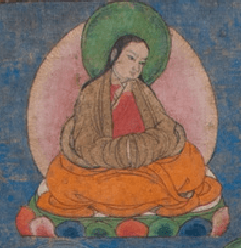 No. 13
Ngok Dodé (Zhedang Dorjé), (1078-1155)
བཤད་རྒྱུད་ཆུ་བོའི་བཀའ་བབས་རྔོག་མདོ་སྡེ། །
Ngok Dodé, Explanation lineage bearer.
Ngok Zhedang Dorje, also called Ngok Dodé was the only son of Ngoktön Chödor. He inherited his father’s full transmission and became the greatest proponent of Marpa’s tantric legacy in the 12th-century Tibet.
From an early age, Dode was in contact with the Dharma and received transmissions from Marpa and his father, especially Hevajra. When he was four, Marpa insisted that he attend his empowerments of the nine-deity Hevajra and fifteen-deity Nairātmyā maṇḍalas, although, as most children of that age, he caused havoc during the transmission by climbing on Marpa’s and his father’s backs and by pulling their beards. That transmission, despite the heir’s young age, established a direct link between Marpa and Dodé, which was crucial for the ensuing lineage as Chödor died when his son was only twelve. By that time, Dodé had learned the Two Segments (Hevajra Tantra) and knew who to turn to in order to further his training.
Chödor also gave his sister a few articles in a book-case and a bag that she was to hand over to Dodé at his becoming of age, making sure that his son received everything he needed to ensure his lineage’s continuation. In the book-case and bag were concealed the heart of the Ngok tradition. In the book-case, Dodé found the “Two Segments of the Ngok Tradition,” that is to say Chödor’s notes on Marpa’s oral transmission of the Hevajratantra called the Jewel’s Ornament. In the felt bag, Dodé found the six doctrines of Nāropa, key-instructions on the six practices as they are taught in the Hevajratantra, known as merging and transference (bsre ’pho) in the Ngokpa lineage.
Dode, a great learned one, held his father’s tantric transmissions and relied on many translators of the time. He wrote under the name Shedang Dorje and passed his legacy on to his grandson. Parinirvana was the 11th day of the 10th month (October 23?), in the year 1154 (wood dog year according to lHo rong chos ’byung). Dode was 76 year.
Ngok Kunga Dorje
 No. 14
Ngok Kunga Dorje, (1145-1222)
མར་རྔོག་རྒྱུད་འཛིན་ཀུན་དགའ་རྡོ་རྗེ་དང་། །
Ngok Kunga Dorje, Holder of the Marngok tantras
Kunga Dorje and Master Gyaltsa Ramo (1134-1170) were both the grandsons of Ngok Dode. Kunga Dorje received most of the Ngok maṇḍalas before his 11th year, from Ngok Dode, thus holding the main Ngok spiritual lineage directly from Ngok Dode, as well as also receiving transmissions again from his uncle Ngok Gyaltsha Ramo.
Being from somewhat an outsider position, Kunga Dorje, through being this perseverant and talented master he was, insured his final position as Dodé’s main heir in the lineage.
Many of his other teachers are well-known. He received the Zhi byed precepts from ’Chus pa Dar ma brtson ’grus (1117-1192), an important master in that lineage. He also studied under rGa Lo tsā ba gZhon nu Pal, from whom he received a special transmission of Vajrapāṇi. He additionally attended masters about whom nothing is known, such as mGos Ri khrod dbang phyug, from whom he received the long-life practice of Amitāyus, and the siddha Shol po ba, who gave him the purification practice of Vajravidāraṇa.
Ngok Ziji Dragpa
No. 15
Ngok Ziji Dragpa, (1190-1269)
གཟི་བརྗིད་གྲགས་པའི་ཞབས་ལ་གསོལ་བ་དེབས། །
Ngok Ziji Dragpa, at your feet we pray!
The son of Ngok Kunga Dorje, Ngok Ziji Dragpa completely received all Ngok cycles from his father. When he was twenty-five years, he was ordained as novice. He received many teachings, yet Ngok Ziji Dragpa mainly studied with his father.
Ngok Ziji had many students, foremost among which were his nephews, Ngok Senge Dra (1223-1296) and Ngok Rinchen Zangpo (1231-1307), who continued the lineage after him.
Ngok Rinchen Zangpo
No. 16 Ngok Rinchen Zangpo, (1231-1307)
རྒྱུད་ཀུན་འཆང་བ་རིན་ཆྱེན་བཟང་པྡོ་དང་།
རྡོག་རིན་ཆྱེན་བཟང་པྡོའིミ
Ngok Rinchen Zangpo – Holder of the whole lineage
As nephew of Ngok Ziji Dragpa, Ngok Rinchen Zangpo was holder of the Ngok lineage, along with Ngok Senge Dra. From his father Ngok Gyalpo Ga, he received teachings on the Combined Families of Pañjara, on Cakrasaṃvara according to Marpa’s tradition and on the body maṇḍalas from Ghaṇṭāpā’s [tradition of Cakrasaṃvara]. Also, later Lama Rinchen Zangpo composed a maṇḍala-ritual for the Combined Families [Pañjara].
Their seems not to be any of Ngok Rinchen Zangpos writings today. Maybe they will turn up.
Ngok Chökyi Gyaltsen
No. 17
Ngok Chökyi Gyaltsen, (1283-1359)
རིག་འཛིན་དྱེད་དཔྡོན་ཆྡོས་ཀི་རྒྱལ་མཚན་དཔལ།
རྡོག་ཆྡོས་ཀི་རྒྱལ་མཚན་གིミ
Ngok Chökyi Gyaltsen Pal, Knowlegde-holder, Captain [stirring the lineage perfectly]
Ngok Chökyi Gyaltsen obtained most of his forefathers’ teachings and the six doctrines from Ngok Rinchen Zangpo, as well as from Ngok Senge Dra, from which he received the empowerments of the Combined Families of Pañjara. He received many teachings from many lineages and lamas, among them the Drikung Kagyu.
Ngok Chökyi Gyaltsen spread the teachings of the Ngok, and manifested great qualities, as well as wonders. For example, once when he was giving an empowerment at Drikung, a bonfire burnt outside of the building when he displayed the circle of protection.
Also, Ngok Chökyi Gyaltsen composed texts, among them a large commentary on the Hevajratantra, in the ways of the Ngok tradition.
Ngok Sangyé Yönten
No. 18
Ngok Sangyé Yönten, (1330?-1394?)
བདེ་སྟོང་ཟུང་འཇུག་སངས་རྒྱས་ཡོན་ཏན་དང་། །
Sangyé Yönten, bliss and emptiness union
Ngok Sangyé Yönten received all Ngok cycles from his spiritual forefathers. He was adorned by the three trainings and gained mastery other many tantras, reading transmissions and key instructions.
Ngok Sangyé Yönten does not figure among the main Ngok lineage-holders as he was not an abbot of their Treuzhing Monastery. Nonetheless he received all the Ngok cycles and played an active role in the transmission of the Ngok tradition, also accounted by Lodro Thaye the Great, in the Kagyu Ngagdzö. His nephew Ngok Jangchub Pal received explanations on Hevajra and Mahāmāyā from both Ngok Dondrub Pal and Sangyé Yönten.
Precious signs manifested when Sangyé Yonten died, such as rainbow lights and relics appearing on his body. He was born on a snake year and died in a monkey year 63 years later, in his sixty-fourth year.
Ngok Jangchub Pal
No. 19
Ngok Jangchub Pal, (1360-1446)
རྔོག་བརྒྱུད་བྱང་ཆུབ་དཔལ་ལ་གསོལ་བ་འདེབས། །
Ngok Lineage Jangchub Pal to you we pray
Ngok Jangchub Pal was born in 1360, having as father Lama Dondrub Pal and as mother Kartrom. Jangchub Pal studied with his father and many other Ngok Masters all the Ngok cycles of teachings without exception until they penetrated his mind. His life and activity flourished, and he was blessed with remaining a long time: it is said that Lord Marpa had blessed the Ngok seat during seven generations, and lama Ngok Jangchub Pal was that seventh.
The 2nd Drukchen Kunga Paljor, among many others, refers to Ngok Jangchub Pal as “the last of seven generations of Ngok jewels.” And also the 15th century historian lHo rong chos ’byung refers to him as the “the seventh generation on the Ngok seat blessed by Lord Marpa”. Some stories related to the Ngok tradition also refer to a prediction by Naropa that he would bless Marpa’s lineage for seven generations or thirteen generations, and that the Ngok would all know how to hold a vajra and bell in their hands.
This the seventh and last Ngok, the great Jangchub Pal, played an important role in the Ngok lineage at a crucial time in the history of Central Tibet.
A skilled player in a world that was becoming more complex, he managed to gather together the spiritual capital of his ancestors and complement it with most of Marpa’s esoteric transmissions extant at the time. This contributed to the transfer of most of his knowledge and assets to other hierarchs and orders, which eventually contributed to the continuation of Ngok lineage until today, though not anymore in the Ngok family-line.
All in all, Jangchub Pal made special efforts to receive all the transmissions that had become representative of the Ngok tradition and weave together the threads that became loose over the years, sometimes receiving several times and from several persons the empowerments (wang), reading transmissions (lung) and key instructions (tri) for each of the Ngok cycles.
He also received some of Marpa’s teachings that were not among the Ngok’s legacy, such as Marpa’s tradition of Guhyasamāja and the Sekarma, a collection of fifteen scrolls expounding Marpa’s core instructions revealed in the 13th century by Guru Chöwang.
Jangchub Pal was instrumental in reshaping and rebuilding a recognizable Ngok tradition that could from that time onwards be transmitted as a collection, called the Seven Mandalas of the Ngok, rather than as individual tantras. In this way, Jangchub Pal brought together the Ngok traditions and Marpa’s legacy, thus appearing as the legitimate holder of the Marpa Ngok Kagyü lineage and continuing the endeavor started by his ancestor, Ngok Dodé.
He is said to have had a vision of Mañjuśrī according to the Namasamgiti Tantra when he was thirteen and to have reached the capacity to perceive that he was inseparable from the deity. He also saw the deities of the Hevajra maṇḍala when consecrating statues of his predecessors, and those of Catuṣpīṭha when giving explanations of that tantra. When he died, there were numerous miraculous events, such as a rain of flowers and so on.
Jangchub Pal stayed in retreat much of his life in a site on the slopes opposite the Treuzhing temple, which is considered to be the location from which Chödor originally departed for Khecara.
Gö Lotsawa states in the Blue Annals that Jangchub Pal was holding yearly transmissions and marked his copy of the Hevajratantra commentary each time he was teaching it, and that he saw 182 such marks.
Unlike many of his ancestors and later hierarchs such as the 4th Shamarpa who travelled incessantly, Jangchub Pal is not said to travel much, and most of his disciples came to meet him in Treuzhing. This may be because he mostly stayed in retreat, and also because it was located in a central yet quiet place, with easy funding from local rulers.
Jangchub Pal was not ordained and had two sons. One of them, Tashi Paldrup became a monk as a child and went to study in Tsetang Monastery, in particular Buddhist logic. He then received all the Ngok traditions from his father and became very learned. As Jangchub Pal had a long life, Tashi Paldrup did not teach other students. He became Treuzhing’s abbot during the life of his father, possibly in 1426.
In 1408, Jangchub Pal met Tsongkapa who had been invited by the Pamodrupa ruler Drakpa Gyaltsen (1374-1432, r. 1385). He had long discussions with him, although it is not recorded that the two hierarchs received transmissions from each other.
Tsongkapa was very impressed by Jangchub Pal’s knowledge and repeatedly praised him. After that time, due to that praise, the reputation of Jangchub Pal soared and he attracted many of the powerful figures of Central Tibet, such as members of the royal court, Gö Lotsawa, and Lochen Sönam Gyamtso.
One of Jangchub Pals disciple was exactly the above mentioned Sönam Gyaltsen (1386-1434), the influential 12th abbot of Densatil Monastery and the brother of the Pamodrupa ruler Drakpa Gyaltsen. Sonam Gyaltsen encouraged Ngok Jangchub Pal to teach more widely.
Parinirvana:
Jangchub Pal died on the 7th of May 1446, in his 87th year. (the second day of the fourth month of the fire male tiger year)
According to Mi bkyod rdo rje, one of his students, He was considered an emanation of Marpa, something that he acknowledged as well.
Sönam Gyamtso
No. 20
Sönam Gyamtso, (1424-1482)
རབ་བྱམས་ལྡོ་ཆྱེན་བསྡོད་ནམས་རྒྱ་མཚོ་དང་།
ལྡོ་ཆྱེན་བསྡོད་ནམས་རྒྱ་མཚོའིミ
Sönam Gyamtso – Great Sanskrit Scholar – Doctor of Buddhist Philosophy
One of Jangchub Pal’s disciples was Chennga Sönam Gyaltsen (1386-1434), the influential 12th abbot of Densatil Monastery and brother of the Pamodrupa ruler Drakpa Gyaltsen .
Drakpa Gyaltsen was a sponsor of many religious leaders, including Jangchub Pal and Lochen Sönam Gyamtso who came there as a teenager. When Lochen was in his eighteenth year, Drakpa Jungne sent him a message: “I invited Ngok Jangchub Pal and preparations are being made in order to receive the Ngok teachings. I want to request the empowerments for the seven maṇḍalas of the Ngok. As this Dharma-Lord is the last of the lineage of seven Ngok, Ithink it is very important if one can receive them from him, so I sent someone to call you.”
Lochen went and received the empowerments while serving as the Ruler’s personal attendant. Afterwards, he said: “At that time, I was a young monk and my studies were in progress. To receive or not to receive the empowerments for the seven maṇḍalas did not depend on me; even though I had begun my studies, that very intention was really [a mark] of the affection the Ruler had for me!” Although he is not said to have met Jangchub Pal later on, that transmission was significant for him and for the future of the Ngok pa teachings as it created a direct link between the old Ngok master and the young scholar. Lochen further studied the Ngok traditions with Gö Lotsawa and passed on the transmission to his disciple, the 4th Shamar.
4th Shamarpa Chödrak Yeshé
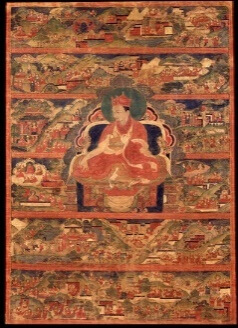 No. 21
4th Shamarpa Chödrak Yeshé (1453-1524)
ཆོས་ཀྱི་རྒྱལ་པོ་སྤྱན་སྔ་ཐམས་ཅད་མཁྱེན། །
The Dharma King, the Omniscient Chen-nga
The fourth Shamar Chödrak Yeshé (1453-1524) was most instrumental for the further transmission of the Ngok tradition.
Jangchub Pal’s disciples, i.e. Gö Lotsawa and Lochen Sönam Gyamtso passed on their transmission to many, among them the 4th Shamar.
The 4th Shamar was born a few years after Jangchub Pal’s demise, one year before the 7 th Karmapa Chödrak Gyamtso (1454-1506). In the absence of the two heads of the Karma Kagyü order, the central figure of the lineage was the Tsurpu abbot, the first Gyaltsab Paljor Dondrup (1427-1489). He recognized the young Shamar and gave him the novice ordination.
In his youth, the 4th Shamar toured Eastern Tibet in order to visit the monasteries and retreat hermitages founded by his predecessors and received teachings from many masters. He travelled to Central Tibet at 22, in 1476. He visited Densatil Monastery, where he was welcome by the abbot Ngakgyi Wangpo (1439-1491), the son of Drakpa Jungne (1414-1445).
He then paid his respect to Gö Lotsawa and Namka Lodrö of Tsetang, who were the preceptors of the Pamogrupa dynasty. He took his final ordination with them, and received many teachings from Gö Lotsawa during a period of six months. It was also at that time that he met Lochen Sönam Gyamtso, from whom he received, among others, Marpa’s tradition.
Gö Lotsawa and Sönam Gyamtso were very close. They were the preceptors of many rulers of south Central Tibet (lHo ka), and enjoyed a central position in the religious landscape of the period. When the 4th Shamar arrived in Central Tibet, he was directly introduced to the court and had access to funding from many of the wealthy patrons of the period, who help him enlarge the monasteries of Nenang and Ganden Mamo. In 1478, Chödrak Yeshé met again with Gö Lotsawa and Lochen. He spent time with Lochen at the residence of the Yargyab rulers in the lower part of the Dol valley and received the Ngok traditions. These transmissions induced deep experiences in him, and he developed a great aspiration to go and meditate in Marpa’s seat in Lhobrag. He made offerings and meditated at many of the places related to Marpa.
He came back to Central Tibet in 1481, and met Gö Lotsawa one last time. He gave teachings on the Ngok traditions to Ngagi Wangpo, who became the ruler of sNe’u gdong later that year.
In 1482, the 4th Shamar performed the funeral rituals for Lochen Sonam. One evening, he had a vision of Gö Lotsawa and Lochen Sonam in front of him in the sky, with masses of fire penetrating his body and transferring to him their realization of the wisdom body as it is taught in the Kālacakra system.
The Shamarpa remained a powerful figure until his death in 1524, travelling incessantly between the various monasteries and hermitages he was in charge of, and relating to most of the important religious hierarchs of his time. In that way, he spread the Ngok maṇḍalas (as well as all the other traditions he held) far and wide.
Khenchen Sherab Palden
No. 22
Khenchen Sherab Palden
མཚུངས་མྱེད་མཁན་ཆྱེན་ཤྱེས་རབ་དཔལ་ལྡན་ཞབས།
མཁན་ཆྱེན་ཤྱེས་རབ་དཔལ་ལྡནミ
Khenchen Sherab Palden – uncomparable Learned One
Khenchen Sherab Palden was the second abbot of Yangpachen, the monastery of the 4th Shamar. He first studied the Kadampa precepts in Nartang Mponastery and received initiations from Shakya Chokden and Langtangpa. He then met the 4th Shamarpa, as well as many other masters, and later became a teacher and finally abbot of Yangpachen. He was equally respected as Shamarpa and was considered an incarnation of Aṅgaja, one of the sixteen arhats. He took the regency after Shamarpa’s passing. Rinchen Phuntsok, the next holder in the Hevajra lineage and Drikung monastery’s abbot spent several years in Yangpachen in the end of the life of the 4 th Shamar’s life, and Sherab Paldan was instrumental in his integration of the Hevajra practice, reflected by his place in the transmission line.
Rinchen Phuntsog
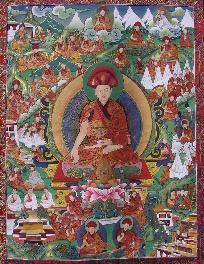 No. 23
Rinchen Phuntsog, (1509-1557)
རིན་ཆྱེན་ཕུན་ཚོགས་ཞབས་ལ་གསྡོལ་བ་འདྱེབས།
རྒྱལ་དབང་རིན་ཆྱེན་ཕུན་ཚོགསミ
The 17th Drigung Kyabgon – Gyalwang Rinchen Phuntsog
Rinchen Phuntsog, the 17th Drikung Denrab, was a great reformer. After receiving transmissions from various lineages, he integrated doctrines, rituals, and meditational practices above all of the Nyingma order into the traditional Drikung Kagyu teachings, thereby opening up and augmenting its dogmatic orientation. Rinchen Phuntsog discovered the treasure text Gongpa Yangzab in the Kiri Yangdzong Cave in the valley of Terdrom. Rinchen Phuntsog was an assiduous author whose writings are also highly regarded by the Nyingma and were included in the collection of Nyingma tantras.
Kunga Rinchen, the 16th Drikung Denrab, and his younger brother and successor on the seat of Drikungtil, Rinchen Phuntsog, were both disciples of the 4th Shamar. Kunga Rinchen and the 4th Shamar were invited together to the Ruler’s Donyö Dorje’s court and Kunga Rinchen later invited the Karma Kagyü hierarch to Drikungtil. ToRinchen Phuntsog took the monastic ordination with the 4th Shamar in Densatil in 1516, and later spent several years (1521-1524/5) in Yangpachen: “For seven years he stayed in Yangs [pa] can. The 4th Zhwa dmar and many other teachers gave him many empowerment and authorizations of the Secret Mantrayāna.” He also studied the writings of the successive holders of the Black and Red Hat as well as many instructions. He later imported many Nyingma teachings in the Drikung lineage and became a treasure-revealer, establishing his own seat of Yangrigar in 1534, when he was demoted from the Drikung throne.
Given the personal and prolonged relationship of Kunga Rinchen and Rinchen Phuntsog with the 4th Shamar and the later bond formed between the Drikung and Shamar incarnation lines, it seems very likely that Kunga Rinchen received texts on the Ngok tradition from the 4th Shamar, and included them in the large collections he was building. This would explain the amount of Ngok texts in the Drikung Chödzö Chenmo, that were stored in the Nechu Lhankang of Drepung Moanstery and probably came from Drikung. Thus, the Drikung lineage played a decisive role in the preservation of the Ngok tradition, even in one of its last avatars, the Kagyü Ngakdzö. As shown below, Kongtrül received the transmission of the works the 4th Shamar lineage from Traleg Rinpoche (see no. 35), himself a holder of the Drikung lineage.
There are several lineages of Hevajra preserved in the Kagyü Ngak Dzö. One is considered to be the “Ngok only Lineage” or “pure Ngok Lineage” (rngog brgyud kha rkyang), as opposed to the Kaṃtsang tradition that branches out after the the 3 rd or 4th Ngok, and thus reached the Karmapas earlier on. The former (“Ngok only Lineage”) passed through all the Ngok and then goes out of the family to Lochen Sönam Gyamtso, and then to the 4th Shamar, Sherab Paldan and Rinchen Phuntsog.
Trungpa Rinchen
No. 24
Trungpa Rinchen, (1519-1586)
སྡོས་པ་མཐའ་བྲལ་དྲུང་པ་རིན་ཆྱེན་དང་།
དྲུང་པ་རིན་ཆྱེན་དཔལ་གིミ
Trungpa Rinchen, precious special one with unending activity.
Trungpa Rinchen Pal is described as a pupil of Rinchen Phuntsog, among others like Lochen Phuntsog Namgyal, Lama Chökyong Rinchen, Togden Dorje Pelbar, Togden Kunga Sherab and Togden Khetsun Dragpa Tsültrim. He was one of the main disciples of Gyalwang Rinchen Phuntsok (1509-1557) the 17th Seat-holder. He was born in the Drikung area and became monk under Rigdzin Puntsog, becoming a great Vinaya holder. He also did lots of retreats.
Trungpa Rinchenpal was named the first Trungpa Changlochen Tulku of Drigungtil Changchubling. Later he became the tutor (Yongdzin) of several lineage-holders of the Drikung Kagyu Tradition. Trungpa Yongdzin Rinchenpal passed on many lineages. Notably in this context of the Hevajra Transmission, is that the connection to 4th Sharmapa is mentioned: “the 4th Sharmapa, who gave it to Rinchen Phuntsok who made Trungpa Changlochen the main transmitter (to his own son and) to Khenchen Namjom Phuntsok (1566-1631) of the Yangrigar monastery. “
The 21st Drikung Kyabgön Sangyé Chögyal Püntsok
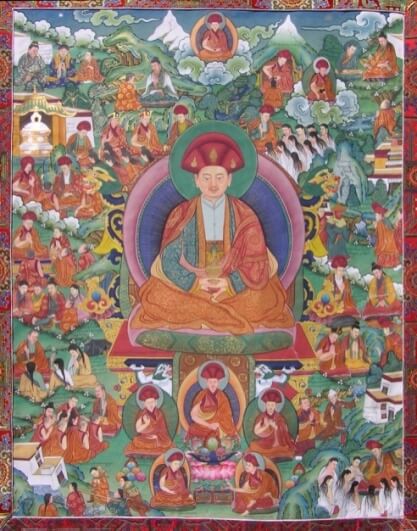 No. 25
The 21st Drikung Kyabgön Sangyé Chögyal Püntsok, (1547-1602)
དང་པོའི་སངས་རྒྱས་ཆོས་རྒྱལ་ཕུན་ཚོགས་དཔལ། །
Glorious Chögyal Püntsok, primordial Buddha
The 21st Drikung Kyabgön Chogyal Rinchen Phuntsog was the only son of Rinchen Phuntsog. Several conditions were not easy during these times. At the end of Rinchen Phuntsog’s life, mother, father and son were united, and the son, the 21st Denrab, went into retreat. During this time Rinchen Phuntsog died. The death of Rinchen Phuntsog was kept secret for 3 years. Also, several conditions led to that the 21st Denrab moved to Katsel monastery, rather than stay at Drikungthil. The stupa with his father’s remains was built in Katsel. During this time, Püntsok Pal established a 3-year retreat, and a new teaching curriculum. In between these cycles of 3 year retreat, teachings were given on “The Five Fold Path of Mahamudra”, and “The 6 Yogas of Naropa”.
In 1573 he married Ache Yang Khyung, and they had 4 sons. His eldest son, Naro Tashi Phuntsog (1574–1628), called Naro Nyipa (“The second Naropa”), succeeded to the throne, while his younger son, Garwang Chökyi Wangchug (1584–1630), was recognized as the 6th Shamarpa. His two youngest sons, Gyalwang Konchog Rinchen (1590–1654) and Kunkhyen Rigzin Chödrak (1595–1659) became the last heirs to the throne of Drikung; the Kyura lineage died out with them.
Upon the death of Konchog Rinchen, the Drikungpa began to seek the reincarnations of their throne holders instead of having an hereditary lineage. A system of two lineage holders was established, that of the elder (Chetsang) and the younger (Chungtsang) brother. In the Drikung chronology Konchog Rinchen is considered as the first Chetsang and Rigzin Chödrak as the first Chungtsang. Both bear the title Drikung Kyabgon.
Rinchen Phuntsog’s only son, Chogyal Rinchen Phuntsog was the 21st Denrab on the Drikung throne when Altan Khan (1507–1582), the powerful ruler of the Tumat Mongols, entered into an alliance with Sonam Gyatso (1543–1588) from the Gelugpa sect that was to influence the future course of Tibetan history decisively. The Mongolian ruler conferred the title of Dalai Lama on Sonam Gyatso and accorded him extensive privileges. Sonam Gyatso became the 3rd Dalai Lama because his two predecessors were given the title of Dalai Lama posthumously. As a result of many armed conflicts during the latter part of the 16th century, Chogyal Rinchen Phuntsog had the Drikung Dzong complex expanded into a fortress.
22nd Denrab on the Drikung throne, Tashi Puntsog
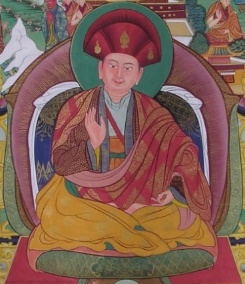 No. 26
22nd Denrab on the Drikung throne, Tashi Puntsog, (1574-1628)
ནཱ་རྡོ་གཉིས་པ་བཀྲ་ཤིས་ཕུན་ཚོགས་ཞབས།
ནཱ་རྡོ་བཀིས་ཕུན་ཚོགསミ
Like a second Naropa, Tashi Puntsog
Tashi Puntsog was considered an incarnation of Naropa, referred to as ‘a second Naropa’, and called Naro Nyipa (“The second Naropa”). He became the 22nd Denrab on the Drikung throne. Tashi Puntsog was the oldest of the four brothers.
Like stated, the first phase of succession to the highest office within the lineage ended with 3 of the 4 sons of Chogyal Rinchen Phuntsog. The first of these to succeed to the Drikung Throne was exactly the eldest, i.e. Naro Tashi Phuntsog.
He became a monk at only 7 years old. From age 8 to 16, he stayed at Drikungtil and practiced the “The five Fold Path to Mahamudra”.
During the difficult times, with the troops of the Mongols all around, the 22nd Denrab navigated as best possible. In the years up to 1615 he visited the Mongolian camps and gave teachings and initiations. As he returned from that visit, the 22 nd Denrab withdrew, and passed the Throne to his younger brother.
Continuing his dharma activity, he established retreat centers in many places. Later, around 1625, he tried to negotiate with the Mongolian, but on the travel there, he died. At first, the Drikung lamas tried to get Tashi Phuntsogs body back to Tibet for the rituals, but did not manage. Much later, his body was smuggled to Kham, and burnt. Some ashes were brought to Drikung.
24th Drikung Kyabgön, the 1st Chungtsang Tulku, Chökyi Dragpa
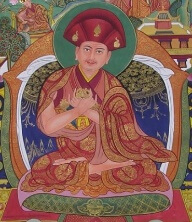 No. 27
24th Drikung Kyabgön, the 1st Chungtsang Tulku, Chökyi Dragpa, (1595-1659)
ཀུན་མཁྱེན་ཆྡོས་ཀི་གགས་པར་གསྡོལ་བ་འདྱེབས།
ཀུན་མཁྱྱེན་ཆྡོས་ཀི་གགས་པའིミ
All-knowing Chökyi Dragpa
All-knowing 1st Chung-Tsang Chökyi Dragpa, [Great Magician, ruler of the elements], [The youngest of the four – the ‘Little Brother’, or ‘the younger relative’].
The 22nd Denrab was the youngest son of the 21st throne holder of the Drikung Kagyü lineage, Chögyal Rinchen Phuntsok. He was considered a reincarnation of his grandfather Rinchen Phuntsog and an emanation of Jigten Sumgön as well as several other great masters. Some time after the age of eleven he did retreats, and realized the signs of Tummo-practice.
In the time around 1613 he studied medicine. Later he traveled to Kailash, Kham as well as Tsari.
In 1627 he married Tashi Pelzom. During the next years, he studied intensively. It was difficult times, and many properties of the Drikung Kagyu were lost in that period. In1645, the 24th Denrab divorced his wife. They did not have any children.
In the midst of devastation and ruin in Tibet [from the start to mid 17th century], Drikung became famous far and wide as well as an admired and feared center of magic. This reputation was traceable to the activity of exactly Konchog Rinchen’s brother, i.e. the 1st Chungtsang Rinpoche, Rigzin Chödrak, ‘all-knowing Chökyi Dragpa’.
In the early 1650s the central government imprisoned the 24th Denrab. In jail, the prison guards reported of special light etc. coming from his cell. Later, the 5th Dalai Lama showed him great respect.
Rigzin Chödrak founded an important school of astrology and divination in Drikung and was also the founder of the Drikung system of medicine, one of Tibet’s four medical traditions.
Panchen Konchog Lhundrub
No. 28
Panchen Konchog lhundrub
ཁབ་བདག་པཎ་ཆྱེན་དཀྡོན་མཆྡོག་ལྷུན་གྲུབ་དང་།
པཎ་ཆྱེན་ དཀྡོན་མཆྡོག་ལྷུན་གྲུབミ
All pervading Lord, Great learned one, Konchog Lhundrub
Panchen Konchog lhundrub was born in Lowotö in Limi. (Full name in tibetan: ལྷྡོ་མཆྡོག་སྤྲུལ་དཀྡོན་མཆྡོག་ལྷུན་གྲུབ་འཕིན་ལས་རྣམ་རྒྱལ་). He was a personal disciple of Rigdzin Chödrak and received all his teachings, later practicing all stages of creation and completion of the new and old mantras, especially Yamantaka. He brought his studies of the Kanjur and Tenjur to perfection and thus became a Pandita. For a long time, he served as teacher at the monasteries Katsel and Ön Rinchen Drak. He was very close to the Fifth Dalai Lama and received great honors. He was the root guru of Lord Bhadra (dKon mchog ‘phrin las bzang po), the Drikung Chetsang, and offered him many empowerments and teachings of the new and old mantra school.
The 25th Drikung Kyabgön, 2nd Chetsang Konchog Thrinley Zangpo
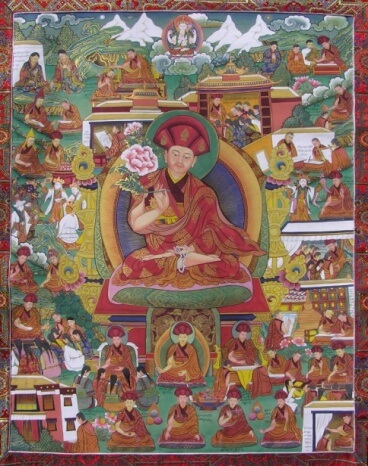 No. 29
The 25th Drikung Kyabgön, 2nd Chetsang Konchog Thrinley Zangpo
ྒྱུ་འཕྲུལ་དྲ་བ་འཕིན་ལས་བཟང་པྡོའི་དཔལ།
དཀྡོན་མཆྡོག་འཕིན་ལས་བཟང་པྡོའིミ
Tailor of Magical Deception, Thrinley Zangpo
The 2nd Che-Tsang Konchog Thrinley Zangpo was a great artist and painter, founder of the Driri-school of Drikung. It was during his reign that the custom of first enthroning the Kyabgon Rinpoches in Drikung Tse Monastery was introduced.
In 1673, Konchog Thrinle Zangpo introduced new ritual dances, based on a vision. In the Snake Year 1677 he introduced the Snake Year Teachings on the threshing ground of Drikung Tse, where he gave initiations and teachings on the Chakrasamvara and Guhyasamaja tantras. Some time after he had established the Snake Year teachings, the 2nd Chetsang also introduced the Monkey year teaching cycle.
In 1681, he had Yangrigar Monastery completely rebuilt, as it had been largely destroyed by the ceaseless warfare. Today he is regarded as the monastery’s founder. He also started to restore Drikung Dzong amidst the turmoil of another Mongolian invasion in 1717, during which the Dzungars overran Lhasa and burned and plundered numerous Nyingma monasteries. Thrinle Sangpo guided the lineage alone for a long time, because the reincarnation of Chungtsang, which was recognized by the 10th Karmapa, had died in a smallpox epidemic before he could be brought to Drikung.
The 26th Drikung Kyabgön 2nd Chuntsang Döndrub Chökyi Gyalpo
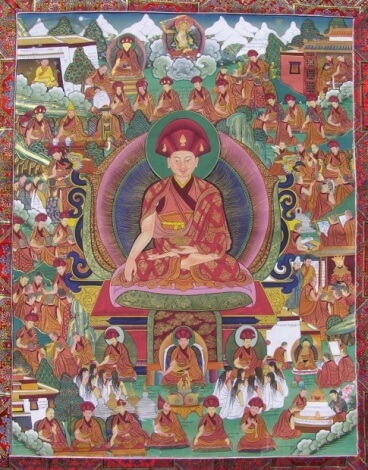 No. 30
The 26th Drikung Kyabgön 2nd Chuntsang Döndrub Chökyi Gyalpo (1704-1754)
ཨྱེ་བཾ་དྡོན་གྲུབ་ཆྡོས་ཀི་རྒྱལ་པྡོའ་ ི ཞབས།
དྡོན་གྲུབ་ཆྡོས་ཀི་རྒྱལ་པྡོའིミ
Evam, mystical union of method and wisdom, Döndrub Chökyi Gyalpo
The 2nd Chung-Tsang Döndrub Chökyi Gyalpo, [Drikung Bhande Dharmaraja] received in 1710 the complete transmission from Marpa, Milarepa etc. At the age of 12 he went into retreat, with focus on several yidams.
During these difficult times in Tibet, many monasteries were destroyed, but Drikung was to some degree spared. During the time before 1718, he was in Lhasa, which he then re-visited in 1721, giving a long-life ritual for the 7th Dalai Lama. After a great assembly in Tibet, Döndrub Chökyi Gyalpo came back with an inspiration to re-vitalize the discipline of the Vinaya, taking back to writings by Jigten Sumgön.
Also during this time, the Chakrasamvara practice was declining in Tibet. The 2nd ChungTsang composed texts for regular daily usage.
In 1747 he withdrew and passed the leadership of the Drikung Kagyu to the 3rd Chetsang.
8th Tai Situ Rinpoche, Chökyi Jungne
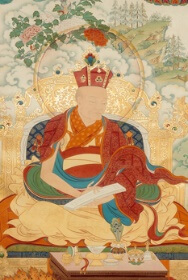 No. 31
8th Tai Situ Rinpoche, Chökyi Jungne, (1700-1774)
ཆྡོས་ཀི་འབྱུང་གནས་ཞབས་ལ་གསྡོལ་བ་འདྱེབས།
ཀུན་མཁྱྱེན་ཆྡོས་ཀི་འབྱུང་གནསミ
Kunchen Chökyi Jungne, 8th Tai Situ Rinpoche
Situ Panchen (full name Situ Panchen Chögyi Jungney), also known as the 8th Tai Situ Rinpoche, was an influential Tibetan painter, writer and medical innovator as well as a notable figure in the histories of Karma Kagyu and the Kingdom of Dergé, where he served as senior court chaplain.
The birth of the eighth Situpa Chokyi Jungne, was recorded in many texts and literatures, and many great masters made the prophecies of his arrival. For example, the 11th Karmapa, Yeshe Dorje (1676-1702), even predicted the place where Chokyi Jungne was born.
At the age of 14, he was recognized according to predictions left by Karmapa Mikyo Dorje, by Terton Sangye Lingpa, Takshampa Mingyur Dorje and by the eighth Shamar Chokyi Dondrup. He was taken to Tsurphu monastery for his enthronement and he received all the teachings and empowerments and studied philosophy and medicine from Karmapa Jangchub Dorje (1703-1732), Shamar Rinpoche, and Rigzin Tsewang Norbu.
On the second day of the third month in the female fire sheep year (1727), at the age of 28 years, Chokyi Jungne, under the permission of the king of Derge, began to build the great Palpung monastery, and accomplished the founding on the tenth day of the eighth month in the year. He also built and restored countless other monasteries throughout his life.
At the age of 63, he visited Central Tibet on pilgrimage for the fifth time. He retreated in a Drikung monastery. At that time, when he performed any kind of offering ceremony, a miracle emanation vision of Dorje Drolo showed up. Once in a Tara fire offering ceremony, the tent he slept grew many blue lotuses. During the day, he kept reciting mantras except short rest time at noon and night. He recited three hundred million times of all kind of mantras. He showed many miracles like just an intention to stop a rainstorm, spreading barley to the sky and the barley straightened on the ground.
The 8th Situpa was one of the most famous masters in Tibetan history. He was acknowledged as a supreme scholar who had no equal in the five knowledge-areas. He was honored the title “Maha Pandita”. It is said that his limitless activities were equal to those of Nagarjuna’s in India. It was also a common saying at the time, that if all of the other Kagyu monasteries came together, their activity wouldn’t be equal to that of Situ Chokyi Jungne.
His foremost disciples were the thirteenth Karmapa, the tenth Shamarpa, Gyalwang Drukpa Trinley Shingta, Drikung Chokyi Gyalwa, Pawo Tsuklag Gyalwa, Drubtop Choje Gyal, Khamtrul Chokyi Nyima, and Lotsawa Tsewang Kunchab.
Karma Ngelek Tenzin
 No. 32
Karma Ngelek Tenzin, (1700?-1768?)
གསང་ཆྱེན་རྱེ་དཔྡོན་ངྱེས་ལྱེགས་བསན་འཛིན་དང་།
རྱེ་དཔྡོན་ངྱེས་ལྱེགས་བསན་འཛིནミ
Great Secret [Vajra] Master, Ngelek Tenzin
Karma Ngelek Tendzin Trinle Rabgye was born in 1700 in Derge, Kham. He was the nephew of the Eighth Situ, Chokyi Jungne (1699-1774). As a youth, he started a basic education of Tibetan reading, writing, and daily prayers, and eventually joined a monastery, most likely Karma Gon and later Palpung, which his uncle established in 1727. He studied both exoteric and esoteric courses under the guidance of his illustrious uncle, specializing in Tibetan medical science. He later trained a number of disciples, including Yilhung Jamyang (yid lhung ‘jam dbyangs), Chokyi Dorje (chos kyi rdo rje), and Drime Zhingkyong Gonpo (dri med zhing skyong mgon po, 1724-1760). He composed a number of medical treatises.
Karma Mingyur Dechen
No. 33
Karma Mingyur Dechen, (1700?-1780?)
བདྱེ་ཆྱེན་མི་འགྱུར་ཚེ་དབང་ཀུན་ཁབ་དཔལ།
ཀརྨ་ཚེ་དབང་ཀུན་ཁྱབミ
Unchanging Great Bliss, Glorious Tsewang Kunkyab
Zurmang Lotsawa Tsewang Kunkyab figured among the foremost disciples of the 8th Situpa, together with the thirteenth Karmapa, the tenth Shamarpa. He was also a disciple of the 7th Pawo Tsuklak Gawe Wangpo.
Belo Tsewang Kunkyab, is co-author of the Rosary of Crystal Gems (Zla ba chu shel gyi phreng ba), which he wrote with the 8th Situ.
Karma Ratna
No. 34
Karma Ratna, (1750?-1800?)
དྡོན་གཉིས་ལྷུན་གྲུབ་ཀརྨ་རཏྣའ་ ི ཞབས།
མཆྡོག་སྤྲུལ་ཀརྨ་རཏྣའིミ
He who Spontaneously Accomplishes the Benefit of Self and Others, Karma Ratna
Chabtsa Tulku Karma Ratna, also known as Öntrül Karma Rinchen, was a disciple of Belo Tsewang Kunkhyab of Zurmang Monastery.
Among his students were Karma Ösal Gyurme and Gönpo Tsewang.
The 6th Traleb Yeshe Nyima
No. 35
The 6th Traleb Yeshe Nyima, (1775?-1850?)
ཁྲ་ལྱེགས་ཡྱེ་ཤྱེས་ཉི་མར་གསྡོལ་བ་འདྱེབས། །
ཁྲ་ལྱེབ་ཡྱེ་ཤྱེས་ཉི་མའིミ
Traleg Yeshe Nyima
The 6 th Traleg Yeshe Nyima was the incarnation of a disciple of Gampopa, Saltong Shogan, one of the important Kagyu Tulku lineages in Tibet. Saltong Shogam is known as one of the Three Men of Kham who were among the five closest students to Gampopa and the only student to receive the complete transmission of both Vajrayana and Mahamudra instructions from him. Among his previous incarnations were Ananda, pupils of Saraha, Nagarjuna, Tilopa, Naropa, as well as being Ngok Choku Dorje, pupil of Marpa.
The 9 th Traleg Tulku, Traleg Kyabgon Rinpoche was well-known in the west and died in 2012.
Jamgon Kongtrül Lodro Thaye
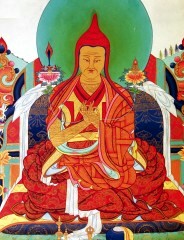 No. 36
Jamgon Kongtrül Lodro Thaye, (1813-1899)
མཚུང་མྱེད་ཀྡོང་སྤྲུལ་ཡྡོན་ཏན་རྒྱ་མཚོ་དང་།
ཀྡོང་སྤྲུལ་ཡྡོན་ཏན་རྒྱ་མཚོའིミ
Without Equal, Kongtrül Yönten Gyamtso
Jamgon Kongtrül Lodrö Thaye had a great veneration and awareness about Marpa and Hevajra: “In the south, in the land of herbs, the valley of Trowo, the translator, (who) emanated from Hevajra, established the source of the river of all siddhas.” Lodro Thaye compiled an important collection, the Treasure of Kagyü Mantras (Kagyü Ngak Dzö), which assembles all the transmissions coming from Marpa together with some others, thus constituting an complete compendium of cycles related to the Highest Yoga Tantras in the Kagyü school.
From the autobiographical notes Lodro Thaye made during his life, we can get a feeling of his veneration for Marpa, the Ngok Tradition and Hevajra.
For instance, we can read about the time of the passing of Lodro Thaye’s main teacher, the Ninth Situ Pema Nyinje Wangpo, who lived from 1774 to 1853, and passed at the end of the fourth month in the Water Ox Year (1852-1854).
Lodro Thaye was involved in ceremonies connected with the arrangement of Situpas funeral. He discussed with Öngen which offering ceremonies to begin with. Öngen had previously said, “Since the refuge lord himself was widely known to be an emanation of Lord Marpa, in the future the two rituals of Hevajra and Guhyasamaja, being Marpa’s principal practices, cannot be omitted.” Öngen added, “You should codify the sadhanas and mandala rituals and detail all the practical methods associated with these.”
Lodro Thaye writes: “I began the project by arranging the sadhana and mandala ritual for the tantra of Hevajra. Among the books in my spiritual master’s residence were texts by such authors as Thrükhang Lotsawa and Rinchen Zangpo of the Ngok clan, but the oral transmissions were no longer available. Among the later works was a manual of medium length by the Fourth Zhamar Chen-nga Chökyi Drakpa, which was incontestably part of the Ngok tradition; and in the collected works of Jonang Jetsün Rinpoché I found several texts, like pure gold, dealing with the tantras transmitted by Marpa. I took these two latter sources as my basis.” … Further, he continues: “While I was compiling the texts, Traleg Yeshé Nyima arrived when the requisite period after Situ Rinpoché’s passing had elapsed. He brought with him the tantric works of Chen-nga Chökyi Drakpa, which he had received from Öntrul Karma Ratna. He had received all the empowerments and oral transmissions for these texts, and so I requested all of thesefrom him. So my lineage of empowerments was totally pure and the line of oral transmission, too, needed no further support from other sources.”
The ‘Chinese Buddhist Encyclopedia’ writes: “The Hevajra Tantra was transmitted by Marpa as part of a series of Tantras that became known as the Seven Mandalas of Ngok to one of his four main disciples, Ngok Chöku Dorje (1036–1106). This tradition was … upheld by the Drikung Kagyu lineage. To save these teachings from oblivion, Jamgön Kongtrul Lodrö Thaye (1813-1899) combined them with other teachings of Marpa to form the Kagyu Ngag Dzö (bka’ brgyud sngags mdzod, ‘The Kagyu Treasury of Oral Instructions’).”
From his autobiography one can read: “In 1855 (the wood hare year), I undertook a personal retreat on the practice of Hevajra according to the tradition of Marpa; some very auspicious omens occurred on the first day. In three months I had completed thephase of approach, along with the supplementary fire ritual. In the fourth month, I went to Palpung Monastery, attending the vase consecration ritual and group offering rituals. I also presided as vajra master over the Hevajra ritual to commemorate Situ Rinpoché.”
Later, in the fourth month of 1869 (fire serpent year): “I had planned to write a commentary on The Hevajra Tantra, and to request permission for this I performed the guru sadhana of Marpa in conjunction with more than a hundred repetitions of rituals to purify myself of obscurations. I also practiced means to gather merit and deepen awareness, prayed, and performed feast offerings and fulfillment rituals. I began writing methodically, beginning with the chapter on the vajra family in the first section. In the tradition of explanation deriving from Marpa and Ngok, there has been no one definitive method of exegesis as there is, for example, in the Sakya tradition. Nowadays, the two commentaries most widely used are Ngok’s Like a Jeweled Ornament and the venerable Rangjung Dorjé’s commentary. But the former is entirely an explanation of the “hidden import” of the text, while the latter emphasizes the meanings of the words themselves, but the description of the deity is somewhat imbedded, which makes it difficult to use when one is explaining it (or listening to the explanation) in connection with the basic tantra. Chen-nga Chökyi Drakpa bases his treatment on so many Indiancommentaries that his explanation is not easy to understand. Such ancient explanations as the commentaries of Ram and Tsak are extremely unclear. The commentary by Thrinlépa is somewhat clearer, and the excellent commentary by Dakpo Tashi Namgyal is so fine that I kept it aside as an overview. Taking the meaning of the words as myprimary concern, I sought to clarify them further in light of the hidden meaning and, distinct from that, the ultimate meaning.”
Also relevant in this connection is Lodro Thayes text: “The Essential Oral Instructions of the Creation and Completion Stages” or “Creation and Completion – Essential Points of Tantric Meditation”
In 1870 (Fifth month of the Iron House Year), Lodro Thaye wrote: “During the monastic summer retreat I taught on the three levels of ordination and the entire texts of The Profound Inner Meaning, The Hevajra Tantra in Two Chapters, and The Highest Continuum, as well as performing a ritual in honor of the tantras.
Gradually, I also wrote an overview of The Hevajra Tantra in Two Chapters. During this period I had very positive signs in my dreams; for example, I dreamed of Vajradhara Pema Nyinjé being very pleased with me and encouraging me, placing a crystal mala around my neck.”
Khenchen Karma Tashi Özer
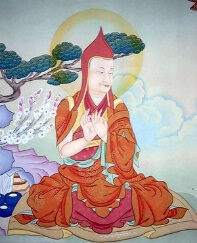 No. 37
Khenchen Karma Tashi Özer, (1836-1910)
མཁན་ཆྱེན་ཀརྨ་བཀྲ་ཤིས་འྡོད་ཟྱེར་དཔལ།
མཁན་ཆྱེན་བཀིས་འྡོད་ཟྱེར་གིミ
Khenchen Karma Tashi Özer
The Glorious One Popular with the Gods, Lama Tashi Lhadar [བླ་མ་བཀིས་ལྷ་དར་], more commonly known as Khenchen Lama [Karma] Tashi [Özer].
His Holiness Drikung Kyabgön Trinle Lhundrub said that Khenchen Tashi Özerwas invited from Palpung monastery to Palme monastery, and that Zhiwä Lodrö (the 6th Chetsang Tulku) received the Kagyü Ngagdzö from him.
Khenchen Tashi Ozer, also known as Shiwai Nyingpo, was an important student of the 19th century Rime masters Jamgon Kongtrul and Jamyang Khyentse Wangpo. He was born in 1836 in the Dilchung region of Alo Shega county of Dokham, to his mother Lhadron and father Tsetra. From a very early age he always behaved in perfect accordance with the Vinaya and displayed natural compassion.
At eighteen, he went to Palpung monastery and met with Jamgön Kongtrul Lodrö Thaye, from whom he received lay vows and the name Tashi Ozer Lodro Gyepe De (bkra shis ‘od zer blo gros rgyas pa’i sde). On that occasion he received from Kongtrul instructions on the Three Levels of Vows (sdom gsum) composed by Ngari Panchen Pema Wangyal (1487-1542), and on the Wish-fulfilling Treasury (yid bzhin mdzod) by Longchen Rabjam (1308-1363), as well as empowerments and explanations on various tantra cycles.
At twenty, he received ordination from Khenchen Dawa Sangpo, and the name Karma Sopa Rabten Palsangpo was given to him. He then continued his studies under Jamgon Kongtrul and learned all of Madhyamika, Prajnaparamita andVinaya from him. He also received extensive teachings on the five cycles of teachings of Maitreya (byams chos skor) and was introduced to Mahamudra. Not only did Tashi Ozer receive the entire transmissions of both the Karma Kagyu and Shangpa Kagyu lineages from Kongtrul and other masters, but also those of the Sakya, Zhalu, Bodong and Jonang. In particular, he received various streams of Kalacakra transmissions, along with instructions on this system’s special set of perfection process meditations, the so-called Six Vajra Yogas.
At twenty-four, he entered into the lower retreat centre of Palpung and did the traditional three-year retreat under the guidance of the retreat master Karma Ngedon Nyingpo, a close student of Jamgon Kongtrul. After having completed the retreat he went to see the great bodhisattva Patrul Rinpoche (1808–1887) and received extensive instructions on Shantideva’s Bodhicharyavatara from him. In particular, he received teachings on the wisdom chapter seven times. At twenty-seven he again went into the presence of Khenchen Dawa Sangpo and received full monastic ordination. For several years he then continued his studies and received teachings from such outstanding masters as H.H. the 14th Karmapa Thegchog Dorje (1797-1867), the two Jamgons (Kongtrul and Khyentse), Terchen Chokgyur Lingpa (1829-1870), Khenchen Dawa Sangpo and others. There is not a subject of either sutra or tantra that he did not study under one of these masters.
After Khenchen Dawa Sangpo had passed away, and upon the insistent advice of the two Jamgons, Tashi Ozer was enthroned as the main Khenpo of Palpung monastery. He began extensive teaching activity and ordained large numbers of monks during his life. On various occasions, he was graced by visions of Buddha Shakyamuni and Tara. In one of his visions of Shakyamuni, he received from him the oral transmissions of various sutras. He was continuously engaged in the practice of the creation and perfection stages and his realization was boundless. There never was a time when he was not involved in either studying, teaching or practicing the holy dharma, and he was eventually closely involved in the upbringing and education of the 11th Tai Situpa Pema Wangchok Gyalpo (1886-1952).
Having studied under some of the greatest masters of his time, he in turn became a teacher to several of the most illustrious masters of the late 19th and early 20th centuries of eastern Tibet. In his old age Khenchen Tashi Ozer spent most of his time up in Jamgon Kongtrul’s hermitage of Tsadra Rinchen Drak. He stayed there with his old friend Khedrub Tashi Chopel, another old and close student of Kongtrul’s. They were famous for never keeping more provisions in Tsadra than what would last for a single day, in order to constantly remind themselves of impermanence. In 1910, after having fulfilled the length and purpose of his life, Khenchen Tashi Ozer dissolved his awareness into the dharmadhatu.
The 35th Drikung Kyabgön, 6th, Chetsang Rinpoche, Shiway Lodro
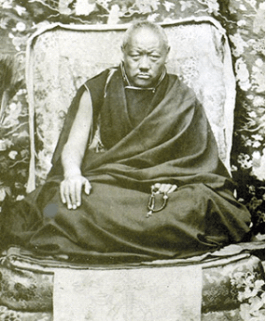 No. 38
The 35th Drikung Kyabgön, 6th, (1886-1943?)Chetsang Rinpoche, Shiway Lodro
ཐུབ་བསན་རྒྱལ་མཚན་ཞི་བའི་བླྡོ་གྡོས་ཞབས།
ཐུབ་བསན་ཞི་བའི་བླྡོ་གྡོསミ
Thubten Gyaltsen Shiway Lodrö
The 6th Chetsang Rinpoche Thubten Gyaltsen Shiway Lodrö was found through a vision by the 34th Drikung Denrab, the 6th Chung-Tsang Tulku.
During a visit of Lhasa in 1893 together with Chungtsang Rinpoche, the two were bestowed the Manchurian title of hotogthu. Since that time, the Drikung Kyabgon Rinpoches have always worn the golden hotogthu hat on official journeys, in accordance with an ancient prophecy of the 1st Chungtsang Rigzin Chödrak that in the future he would wear a golden hat.
Later, Shiway Lodrö wrote comprehensive guidebooks to holy places about his pilgrimages to Mt. Kailash and Lapchi.
Shiway Lodrö’s main interest lay in integrating meditative practice and philosophical teaching, as these were the central pillars of education and training in the Drikung Kagyu tradition. Also, Shiway Lodrö built by himself a retreat-cabin at Drikung Thil, and was often in singular retreat.
He also gained great fame on account of his clairvoyant abilities. He arranged for the renovation of Yangrigar Monastery and the addition of a building for storing the wooden blocks used for printing Buddhist texts, and also introduced the first committee in Drikung Til to improve the monastery administration. However, the poor educational leve in his monasteries remained his greatest concern. In 1932, he established the Nyima Changra academy of higher Buddhist studies.
After the untimely death of the 7th Chungtsang, Tenzin Chökyi Jungne (1909–40), Shiway Lodrö became heavy-hearted and soon thereafter, on a journey to Kham, he suffered a stroke from which he did not recover. He spent most of his time inmeditation until his death. Shiway Lodrö died in 1943.
Drikung interim Regent, H.E. Tritsab Gyabra, Tenzin Thubten
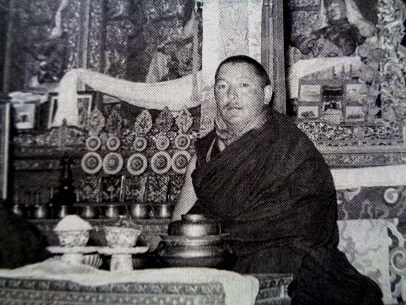 No. 39
Drikung interim Regent, H.E. Tritsab Gyabra, Tenzin Thubten, (1924 or 1921?-1979)
བསན་འཛིན་ཐུབ་བསན་ཞབས་ལ་གསྡོལ་བ་འདྱེབས།
དཀྡོན་མཆྡོག་བསན་འཛིན་ཐུབ་བསན
Tritsab Tenzin Thubten
The 6th Tritsab Rinpoche incarnation, Gyabra Thubten Wangpo, was the heart disciple of the 34th Drikung Kyabgon Chetsang Rinpoche and the 35th Drikung Kyabgon Chungtsang Rinpoche. After the two Holinesses passed away, he became the acting head of the Drikung Kagyu order. Upon the recognition of the reincarnations of the two present Holinesses (the 36th and 37th Throneholders) in the late 1940s, he became responsible for their education. He transmitted all the Dharma teachings, empowerments and practices of Drikung Kagyu to the two reincarnated Holinesses and many other rinpoches, tulkus and lamas of Drikung Kagyu. In the history of Drikung Kagyu, the reincarnations of Thritsab Rinpoche can be considered as one of the masters who makes great contribution to the preservation of the Drikung Kagyu lineage. When trying to locate the tulku of the 7th Chetsang, Tritsab Rinpoché had a vision while he was at Namtso Lake. On the surface of this sacred lake, he saw the image of a house with two upper stories, a victory banner and the surrounding garden and paths. He saw a puppy circling around the victory banner, which confirmed the incarnation had been born in the Year of the Dog.